Tag: philosophy

  • Employing the Socratic method in leading

    If leadership is about showing the way, then Socrates was the ultimate master of the art. In his time, the world was only vaguely understood, and his primary guides were perhaps the great Greek works, such as The Odyssey and the tragedies of Euripides. There was no media to amplify his message, yet he managed to inspire an entire state with his ideas.

    Socrates recognized that merely pointing to the path was not enough; true leadership required helping people understand the path for themselves. He did this by gently yet persistently challenging their deepest assumptions and beliefs. Like a sculptor chiseling away at stone to reveal a masterpiece, he chipped away at unquestioned certainties, compelling individuals to look inward and discover deeper truths.

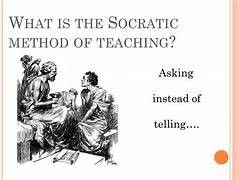
    To achieve this, he employed what is now known as the Socratic Method—a process of disciplined questioning designed to stimulate critical thinking and illuminate underlying assumptions. Rather than providing direct answers, Socrates asked a series of probing questions, encouraging individuals to examine their own reasoning and confront inconsistencies in their beliefs. This method was not about proving someone wrong but about guiding them toward greater clarity and self-awareness. The dialogue unfolded as a mutual exploration of truth, where Socrates acted as a facilitator rather than an authority. Through this process, his students often arrived at conclusions they had not previously considered, leading to a deeper and more lasting understanding.

    A key responsibility of a leader is to help people question their perspectives and see reality more clearly. In a corporate setting, this means fostering a deeper understanding of market dynamics; in a social or organizational context, it could mean guiding individuals toward balance and wisdom. By adopting the Socratic method, a leader can help others uncover the truth for themselves, leading to a stronger sense of ownership and commitment.

    Moreover, the act of questioning signals that the leader genuinely listens and seeks to understand where individuals are coming from, shaping a path forward through incremental progress.

    This form of leadership is gentle yet powerful, relying on essential soft skills such as listening, coaching, and fostering independent thought. By encouraging reflection and critical thinking, leaders can cultivate a culture of learning, adaptability, and wisdom—qualities that are invaluable in today’s complex world.

  • What can leaders learn from Socrates?

    Socrates was a gadfly, a persistent questioner who roamed Athens engaging people in conversations and challenging their beliefs. His inquiries often focused on examining the assumptions underlying deeply held convictions.

    Using a gentle and gradual approach, he probed carefully, exposing contradictions in reasoning. This technique, known as the Socratic method, became a cornerstone of critical inquiry. While Socrates himself did not write any books, his student Plato documented his philosophy in a series of dialogues.

    The most profound lesson of Socrates’ life, however, came at its end. His constant questioning provoked the ire of those who championed dogma, blind beliefs, and intellectual complacency. Meletus, a poet; Anytus, a politician; and Lycon, an orator, accused him of corrupting the youth with his ideas and brought him to trial before an Athenian jury.

    A jury of 500 citizens heard the prosecution and allowed Socrates only a few minutes to defend himself. His conviction was almost inevitable, and he was sentenced to death by drinking hemlock.

    Socrates could have avoided execution by pleading guilty, but he refused. To him, truth was a sacred value—one discovered through proper reasoning, not the opinion of the majority. His death became a pivotal moment in the history of humanity’s pursuit of truth and conviction.

    Shortly after his execution, the Athenians realized their mistake, and some accounts suggest the accusers faced public retribution.

    Socrates’ life and death teach us the enduring value of truth and reason. He demonstrated that, even in the face of immense challenges, one can stand firm on the principles of integrity and rational inquiry rather than succumbing to convenience or conformity.

  • Great Man Theory Revisited

    Leaders have always been fascinating to study, and throughout history, people have sought to understand what makes them stand out. In the 19th century, disciplines such as psychology and sociology were still in their infancy, and the scientific method was not widely applied to social phenomena.

    Thomas Carlyle, a prominent social philosopher of the 19th century, proposed the Great Man theory to explain leadership. According to this theory, some individuals are born with innate qualities that predestine them for exceptional achievements. These individuals, often men, were believed to be the driving force behind societal change. The theory suggests that leadership traits such as courage, wisdom, fairness, determination, and the ability to understand people and situations are biologically determined and inherent in certain men (excluding women).

    At the time, society primarily revered military heroes and monarchs, most of whom either inherited their positions or rose to power from a small aristocratic elite. In an era marked by upheaval and debates over the role of the church and monarchy, people sought explanations for the social and political turmoil. Carlyle’s theory suggested that great men, endowed by God with specific traits, were destined to lead and guide society forward.

    While influential in its time, the Great Man theory was later discredited for its overly simplistic and deterministic assumptions. Rightly so, as it overlooks the complex interplay of environment, circumstances, and personal development in shaping leaders.

    Nevertheless, this theory continues to resonate at an intuitive level. Even today, when we try to understand leaders, we often mythologize them, attributing extraordinary abilities to their success. In truth, many leaders are individuals who have cultivated specific skills and happened to be a hap[py confluence of  favorable circumstances that propels their rise to prominence.

  • Learning from Seneca

    Learning from Seneca

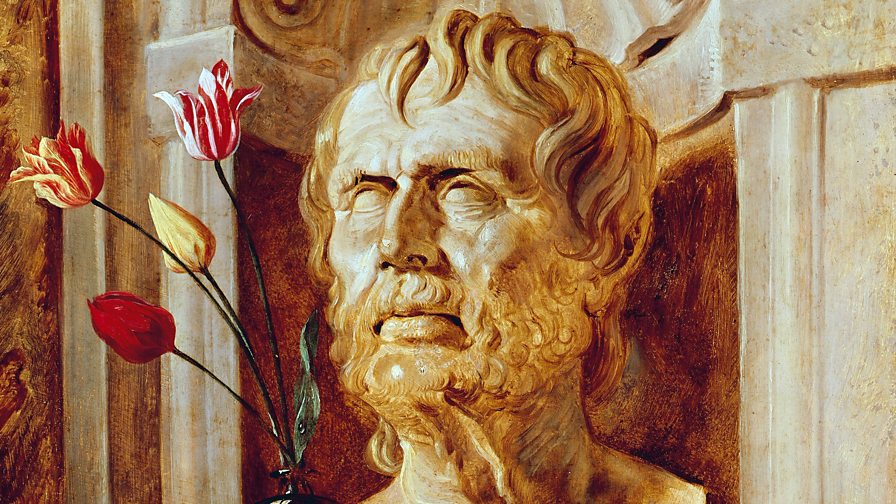
    Seneca’s influence on Western thought is monumental. Among those inspired by his ideas are intellectual giants like Descartes, Rousseau, Diderot, Dante, Chaucer, and Montaigne—a veritable roll call of Europe’s intellectual aristocracy.

    Born around the start of the Common Era, Seneca was a towering figure of his time. He served as the tutor to Rome’s infamous emperor Nero (until forced to leave to escape execution), a senator, and a prolific writer of essays, poems, and tragedies.

    Today, Seneca’s legacy is most closely associated with Stoicism, a philosophy of life founded around 336 BCE by Zeno, who taught in a stoa (or porch). Stoicism’s core principles remain deeply relevant for modern leaders:

    1. Universal equality and community: They viewed all human beings as equals and envisioned the world as a single community.
    2. Living in harmony with nature: This meant being content with life’s material essentials and using reason to understand and navigate existence.
    3. Perspective on good and bad: They believed that “there is nothing good or bad, but thinking makes it so.”

    In today’s world, leaders are bombarded by the relentless demands of consumerism, rapid shifts in circumstances, and overwhelming ambiguity, all of which can challenge their sense of reason and perspective.

    By embracing Seneca’s timeless wisdom, leaders can remain grounded and make more thoughtful, effective decisions.

    (To be expanded further with additional insights.)

  • Society & leadership

    Corporate leaders often find themselves consumed by the immediate demands of their business environment—market share, growth, and stock performance. While these metrics are important and shape specific behaviors, they are often guided by historical norms and typically have limited impact on the broader external environment.

    However, times change. Markets evolve, priorities shift, and competition transforms. What once seemed like a benign pursuit of market share and valuations can sometimes result in harmful effects on society or the environment. In other cases, even without external changes, leaders may make decisions that inadvertently harm the communities they serve.

    This is where true leadership becomes critical. A responsible leader prioritizes societal well-being above organizational gains and places personal interests last. Such a leader is deeply sensitive to the interplay between corporate goals and their societal impact.

    True leadership means ensuring that human values and societal principles take precedence when they conflict with organizational objectives. It is about acting as a steward of societal balance and long-term interests rather than focusing solely on short-term corporate gains.

    When we witness events like environmental disasters like oil spillages caused by negligence or financial scandals such as Wall Street’s excesses, it becomes evident how detrimental poor leadership can be. These are examples of leaders chasing misguided priorities, or “false gods,” at the expense of society.

    Good leadership is about accountability, foresight, and the courage to make decisions that preserve society’s finest values above everything else.