Tag: personal-development

  • More Scientific Decision Making

    Leading an organization is inherently complex, requiring a constant balancing act between legacy and future uncertainties while navigating the cultural and psychological rhythms of people within the system.

    Nature, too, is complex, yet humans have developed principles to understand it, codified in the scientific method. This approach, though powerful, differs from our instinctive decision-making, which tends to bypass structured analysis in favor of intuition. However, leaders can sharpen their decisions by integrating elements of scientific thinking.

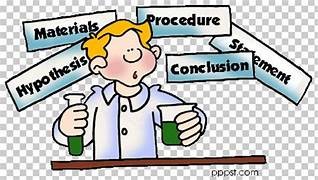
    The process begins by identifying a specific issue and gathering preliminary data. 

    The next step is to form a hypothesis that is clear, measurable, and specific. 

    This hypothesis is then tested, keeping in mind the controllable and uncontrollable variables. Data from these tests is collected and analyzed.

     The findings are then openly discussed, allowing diverse perspectives to refine the conclusions.

    A few guiding principles strengthen this process: the simplest explanation is often the best, conclusions should be based on empirical evidence, and any hypothesis must be falsifiable—open to being disproven by a different set of data.

    While leadership decisions often operate under constraints, applying these principles where possible leads to sharper, rigorous, and more widely accepted outcomes.
  • How Achievements Propel Individuals into Leadership

    How does one transition from an ordinary individual to a leader? There are many paths. Some rise through excellence in their field, demonstrating exceptional qualities and earning the respect of those around them—like military heroes or politicians who gradually assume leadership through their work.

    However, another path to leadership exists. Some individuals achieve prominence in a different domain, and their success embodies the unfulfilled dreams of a community. Their achievements catapult them into the limelight, giving them a platform for leadership. If they are capable and willing, they evolve into genuine leaders.

    This phenomenon is evident in politics. Two striking examples come to mind.

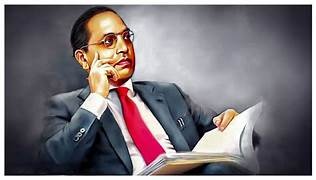
    Dr. B.R. Ambedkar is a towering figure, particularly for millions of historically marginalized Indians, such as the Dalits. He played a pivotal role in mobilizing the masses and bringing national attention to the injustice of caste discrimination. Yet, before becoming a leader, he first distinguished himself as an extraordinary scholar. Earning two Ph.D.s—from Columbia University and the London School of Economics—he achieved what was almost unthinkable for someone from his background. His academic brilliance made him an aspirational figure, paving his way to leadership.

    Similarly, Biju Patnaik, who later became the Chief Minister of Odisha (my home state), first gained fame as a fearless pilot. He was among the first to fly into Srinagar when war erupted between Pakistani raiders and India post-partition. He also daringly rescued Indonesian resistance leader Sukarno when the country was under Dutch occupation, landing on an abandoned airstrip to fly him out of the country. His audacity resonated deeply with the people of Odisha, known for their gentle and reserved nature. Patnaik’s exploits embodied their unspoken aspirations, proving that someone from their midst could achieve the extraordinary. This deep connection cemented his path to leadership, a status he retains even long after his time.

    Leadership is not always a deliberate pursuit. Sometimes, it is thrust upon those whose achievements awaken a sense of possibility in others. Whether through intellectual brilliance or daring heroism, those who inspire and represent the collective dreams of their people often find themselves propelled into leadership.

  • Employing the Socratic method in leading

    If leadership is about showing the way, then Socrates was the ultimate master of the art. In his time, the world was only vaguely understood, and his primary guides were perhaps the great Greek works, such as The Odyssey and the tragedies of Euripides. There was no media to amplify his message, yet he managed to inspire an entire state with his ideas.

    Socrates recognized that merely pointing to the path was not enough; true leadership required helping people understand the path for themselves. He did this by gently yet persistently challenging their deepest assumptions and beliefs. Like a sculptor chiseling away at stone to reveal a masterpiece, he chipped away at unquestioned certainties, compelling individuals to look inward and discover deeper truths.

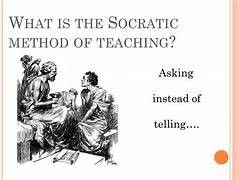
    To achieve this, he employed what is now known as the Socratic Method—a process of disciplined questioning designed to stimulate critical thinking and illuminate underlying assumptions. Rather than providing direct answers, Socrates asked a series of probing questions, encouraging individuals to examine their own reasoning and confront inconsistencies in their beliefs. This method was not about proving someone wrong but about guiding them toward greater clarity and self-awareness. The dialogue unfolded as a mutual exploration of truth, where Socrates acted as a facilitator rather than an authority. Through this process, his students often arrived at conclusions they had not previously considered, leading to a deeper and more lasting understanding.

    A key responsibility of a leader is to help people question their perspectives and see reality more clearly. In a corporate setting, this means fostering a deeper understanding of market dynamics; in a social or organizational context, it could mean guiding individuals toward balance and wisdom. By adopting the Socratic method, a leader can help others uncover the truth for themselves, leading to a stronger sense of ownership and commitment.

    Moreover, the act of questioning signals that the leader genuinely listens and seeks to understand where individuals are coming from, shaping a path forward through incremental progress.

    This form of leadership is gentle yet powerful, relying on essential soft skills such as listening, coaching, and fostering independent thought. By encouraging reflection and critical thinking, leaders can cultivate a culture of learning, adaptability, and wisdom—qualities that are invaluable in today’s complex world.

  • Self Mastery

    The Sixth century BC saw an unusual flourishing of philosophical wisdom in Asia. There was Buddha in India and Lao Tzu in China.

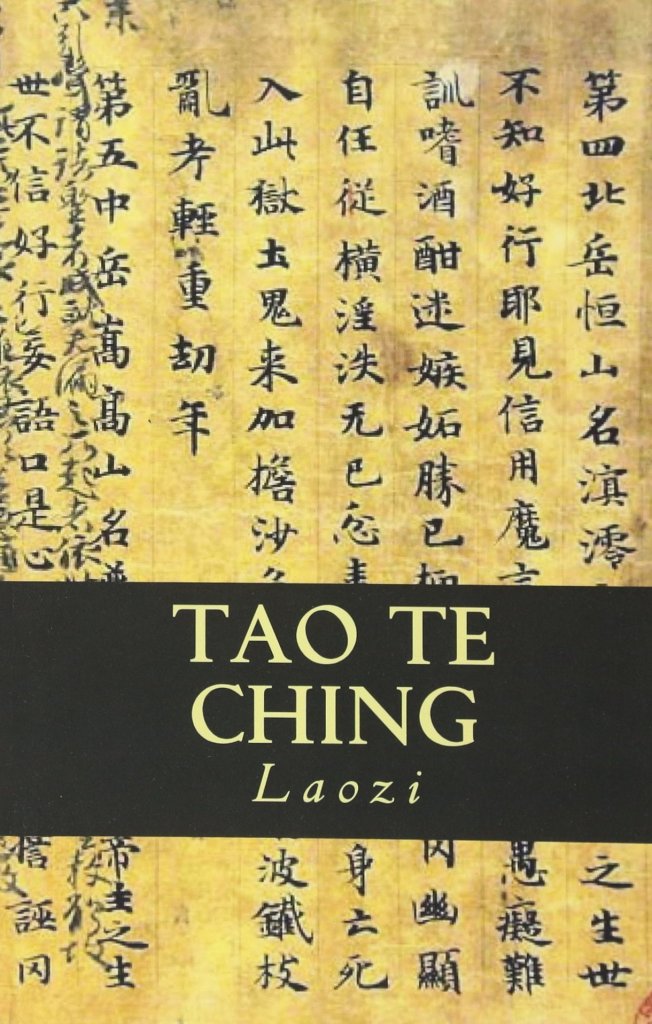
    Lao Tzu wrote Tao Te Ching – Tao is translated as The Way, Te is power or potential and Ching means a book.

    The 81 verses are a powerful way to understand the nature of reality.

    Self knowledge and self-mastery are the primary goals of humans as per the author. They are achieved when humans connect their inner mind with the subtle changes in the outer world thus developing an ability to influence events more intelligently or to act more in harmony with the world.

    Mastering the self

    Those who know others are intelligent;

    Those who know themselves have insight.

    Those who master others have force;

    Those who master themselves have strength.

    Those who know what is enough are wealthy.

    Those who persevere have direction.

    Those who maintain their positions endure.

    And those who die and yet do not perish, live on.

    This passage highlights the deep wisdom of self-mastery. To know others is a sign of intelligence, but to truly know oneself reveals profound insight. Mastering others may require power or force, yet mastering oneself demands strength of character and inner discipline.

    True wealth comes from knowing what is enough. It is not measured by material possessions but by contentment and gratitude.

    Perseverance gives clarity and a sense of direction, helping us stay focused on our goals. Standing firm in one’s values ensures resilience and the ability to endure life’s challenges.

    A life lived with meaning and purpose leaves an impact that outlasts death. Self-mastery is not just about personal growth; it is about creating a lasting influence on the world and those we touch.

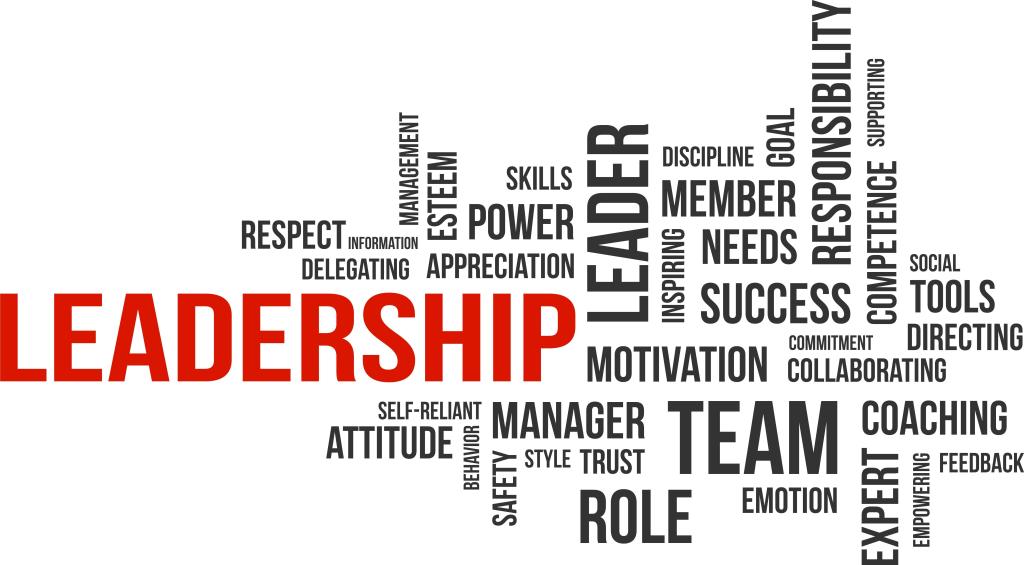
  • What is Leadership? Who is a Leader? What is Leading?

    Some widely used terms are difficult to define and are understood nebulously. ‘Leading’ is one of them. ‘Leading’ is used as a term for any set of activities that involves going ahead either individually or in a group.

     ‘Leadership’ is generally used both as a term for a process and also for a demonstrated skill-set. A leader is loosely used to describe someone who occupies a position of authority or power.

    Lead, Leader and Leadership – Origins of the Concepts

       Lead

    The origin of the word is from the old Norse word ‘lioa’ which meant ‘to go’. The equivalent old English word for ‘lead’ was ‘laedan’ which meant ‘to guide’ or ‘to go with one’. In middle English the word became ‘leden’.

    In the late fourteenth century it also acquired the meaning of ‘being in the first place’. It was also used as a noun which meant the ‘action of leading’ in the 13th century and ‘the front or the leading place’ from the 1560s.  There is no use of the word in ancient Greek or Latin literature.

    In medieval English, ‘lead’ was also a path or way or road. It meant showing the way. Earlier a shepherd used to ‘lead’ the flock. The shepherd had to see the direction and guide the group.

    It also meant that others followed of their own choice. Once the people do it out of deference to power, then it is no more leading. If the followers are not following of their own accord, then they are not being led.

    That is why leadership in formal structured hierarchies (where accepting authority is mandatory) is seen as truly effective only when followers have not merely completed the tasks as per stipulations but achieved something extraordinary beyond the routine job goals.

       Leader

    Someone or something that leads or is able to lead is a leader. The first known use of the word was in the fourteenth century.

    The one who leads is a ‘leader’. The word has different connotations in different languages. In German , it is ‘Fuhrer’, sadly misused by Hitler. In Indian languages it has no direct translation except ‘Neta’, typically now seen as a political leader. This political association tends to give it a negative perception and is pejorative in many ways.

    But merely holding a position is also not being a leader. It is much more than that.

       Leadership

    The capacity to ‘lead’ or the ‘act of leading’ is leadership. It was first used in 1821 for the’ position of a leader” from leader+ ship. Over a period of time it came to be understood as ‘characteristics necessary to be a leader’. 

    Leadership is about possessing the virtue of skills for leading. A person possessing these skills is a good leader.

    (Taken from ‘We the Leaders’)

    .