Tag: management

  • The value of a genuine apology

    The Boeing Dreamliner crash in Ahmedabad was one of the most devastating tragedies in aviation history. Air India, which operated the aircraft, is a Tata company—valued for its image of trust and care.

    In situations both relatively minor and deeply grave like this, leaders owe apologies.

    Etymologically, the word “apology” in Greek means a speech in self-defense. But today, it has evolved to mean an acknowledgment of a mistake, an expression of regret, and an offer of reconciliation.

    To be effective, an apology must be sincere and genuine. It should acknowledge the mistake or lapse in judgment. Equally important, it must convey regret not just for the error itself, but also for its consequences.

    In the case of a serious air crash, even a hint of a false promise can do more harm than good. While a leader may not be directly responsible for every act, he or she must still take ownership. Most people understand the complexities involved and the shared matrix of accountability. A leader’s admission demonstrates character—and by shielding the team, it fosters team spirit.

    In the 2010 Deepwater Horizon oil spill, British Petroleum did spend $20 billion to clean up the damage and restore the ecology. Yet, the CEO’s initial, half-hearted apology—marked by a reluctance to fully accept responsibility—caused significant reputational damage.

    Apologies must also be timely. A delayed apology often feels like a stale excuse.

    And beyond timing and sincerity, a genuine apology must include a clear plan for corrective action and a commitment to follow through.

    A well-delivered apology can heal wounds and restore reputation quickly. But the damage caused by a poorly handled apology can linger for years.
  • What you should not miss in managing change

    Managing change in an organization is one of the hardest things to do. While we often get the basics right—like communicating a vision, setting milestones, and tracking progress—we also tend to miss a few crucial elements.

    First, even scientific revolutions only happen when paradigms shift. Culture—or prevailing paradigms—ultimately determine what can change and what won’t. Period. The values and beliefs held by the majority dictate what gets priority and what gets challenged. The case of Dr Ignaz Semmelweis is a classic example: when he proposed that disinfecting hands after surgery reduces mortality, no one believed him. It took decades for that idea to be accepted across the medical community. Work on the dominant values and beliefs first.

    Second, when articulating a vision, imagery and metaphors play a vital role. Martin Luther King Jr.’s speech invoking “sunlit paths of justice” and the metaphor of “promissory checks”—illustrated this brilliantly.

    Third, understand the territory—the minutiae of the landscape—thoroughly. Make sure every dynamic of the change is grasped as fully as possible. Plan in detail and go for incremental shifts, because revolutionary change often meets strong resistance and can lead to efforts being dissipated in managing conflict. Identify the key people who will drive the change at each stage. Every aspect of the process must be mapped as clearly as possible.

  • Lessons from ‘Why Nations Fail’: Building Strong Organizations

    Geopolitics is endlessly fascinating. Some countries have flourished for a long time, while others have faltered. Some have enjoyed periods of growth only to  later decline. Many have tried to explain these patterns through geography, history, culture, education, or access to resources.

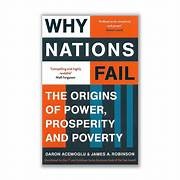
    Economists Daron Acemoglu of MIT and James Robinson of Harvard explored these questions in depth in their landmark study Why Nations Fail, which earned them the Nobel Prize in Economics in 2024. Their findings challenge conventional wisdom: the prosperity of nations does not stem from geography, history, culture, or natural wealth. Instead, it is the quality of a country’s institutions that determines its long-term success.

    Prosperous nations are built on inclusive institutions—those that encourage broad participation, uphold the rule of law, distribute power fairly among political bodies, and enable economic freedom. These institutions create a foundation for innovation, accountability, and growth. Over time, they generate a virtuous cycle of progress.

    By contrast, nations with extractive institutions—which concentrate power, limit participation, and suppress individual potential—tend to stagnate or decline. Poor institutional design leads to poor decisions, and over time, this erodes progress.

    There is a powerful lesson here for leaders in any field. Just as nations rise or fall based on institutional strength, so too do organizations. A sound internal framework—values, policies, and processes (its “constitution”)—is essential. Each function must operate effectively within its defined charter. Healthy tensions, such as those between audit and HR, or between design and operations, are not only natural but necessary for achieving optimal outcomes.

    A strong leader must take a macro view—crafting the right institutional architecture, setting the tone, and then empowering each part of the organization to function at its best. Inclusive leadership, clear incentives, and distributed responsibility are at  the heart of sustained success.

  • More Scientific Decision Making

    Leading an organization is inherently complex, requiring a constant balancing act between legacy and future uncertainties while navigating the cultural and psychological rhythms of people within the system.

    Nature, too, is complex, yet humans have developed principles to understand it, codified in the scientific method. This approach, though powerful, differs from our instinctive decision-making, which tends to bypass structured analysis in favor of intuition. However, leaders can sharpen their decisions by integrating elements of scientific thinking.

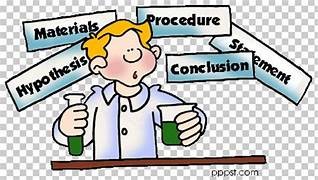
    The process begins by identifying a specific issue and gathering preliminary data. 

    The next step is to form a hypothesis that is clear, measurable, and specific. 

    This hypothesis is then tested, keeping in mind the controllable and uncontrollable variables. Data from these tests is collected and analyzed.

     The findings are then openly discussed, allowing diverse perspectives to refine the conclusions.

    A few guiding principles strengthen this process: the simplest explanation is often the best, conclusions should be based on empirical evidence, and any hypothesis must be falsifiable—open to being disproven by a different set of data.

    While leadership decisions often operate under constraints, applying these principles where possible leads to sharper, rigorous, and more widely accepted outcomes.

  • Konosuke Matsushita – 1

    Konosuke Matsushita, the founder of Panasonic Corporation, embodied the essence of Japanese leadership. In 1918, he established Matsushita Electric Manufacturing Works as a small vendor of lamp sockets. Over the decades, it evolved into a global powerhouse, encompassing iconic brands like Panasonic, Sanyo, Technics, and National, employing over 200,000 people worldwide.

    Matsushita’s leadership was deeply rooted in the values of hard work, determination, and resilience—principles shaped by his own life experiences. His childhood was marked by hardship. His family lost its wealth when he was just four, and within two years, he lost three siblings. At nine, he began working as an apprentice, first with a charcoal heater dealer and later in a bicycle shop. The work was grueling—seven days a week, often extending to household chores for his employer. Yet, rather than succumb to despair, he used these challenges to learn and grow. Determined to rebuild his family’s honor and fortune, he embraced adversity as a tool for character-building and self-reflection. By the late 1930s, his company had grown to 6,500 employees and was thriving.

    World War II brought a new set of trials. Following Japan’s defeat, Matsushita’s company faced punitive measures for its military contracts. He and his top executives were forced to step down, financial restrictions drained resources, employees were laid off, and he had to mortgage personal assets. His health deteriorated to the point where he relied on alcohol and medication to sleep. Yet, he persevered. After nearly six years of turmoil, he gradually rebuilt his business, stabilizing operations and reaffirming his leadership.

    Matsushita’s journey reflects the ability to endure setbacks, adapt, and rebuild.

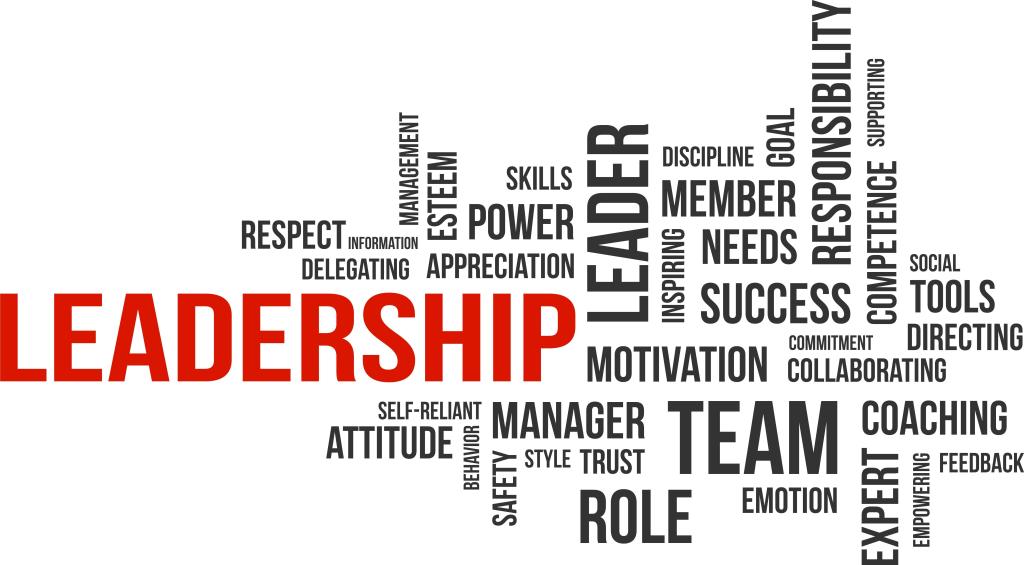
  • What is Leadership? Who is a Leader? What is Leading?

    Some widely used terms are difficult to define and are understood nebulously. ‘Leading’ is one of them. ‘Leading’ is used as a term for any set of activities that involves going ahead either individually or in a group.

     ‘Leadership’ is generally used both as a term for a process and also for a demonstrated skill-set. A leader is loosely used to describe someone who occupies a position of authority or power.

    Lead, Leader and Leadership – Origins of the Concepts

       Lead

    The origin of the word is from the old Norse word ‘lioa’ which meant ‘to go’. The equivalent old English word for ‘lead’ was ‘laedan’ which meant ‘to guide’ or ‘to go with one’. In middle English the word became ‘leden’.

    In the late fourteenth century it also acquired the meaning of ‘being in the first place’. It was also used as a noun which meant the ‘action of leading’ in the 13th century and ‘the front or the leading place’ from the 1560s.  There is no use of the word in ancient Greek or Latin literature.

    In medieval English, ‘lead’ was also a path or way or road. It meant showing the way. Earlier a shepherd used to ‘lead’ the flock. The shepherd had to see the direction and guide the group.

    It also meant that others followed of their own choice. Once the people do it out of deference to power, then it is no more leading. If the followers are not following of their own accord, then they are not being led.

    That is why leadership in formal structured hierarchies (where accepting authority is mandatory) is seen as truly effective only when followers have not merely completed the tasks as per stipulations but achieved something extraordinary beyond the routine job goals.

       Leader

    Someone or something that leads or is able to lead is a leader. The first known use of the word was in the fourteenth century.

    The one who leads is a ‘leader’. The word has different connotations in different languages. In German , it is ‘Fuhrer’, sadly misused by Hitler. In Indian languages it has no direct translation except ‘Neta’, typically now seen as a political leader. This political association tends to give it a negative perception and is pejorative in many ways.

    But merely holding a position is also not being a leader. It is much more than that.

       Leadership

    The capacity to ‘lead’ or the ‘act of leading’ is leadership. It was first used in 1821 for the’ position of a leader” from leader+ ship. Over a period of time it came to be understood as ‘characteristics necessary to be a leader’. 

    Leadership is about possessing the virtue of skills for leading. A person possessing these skills is a good leader.

    (Taken from ‘We the Leaders’)

    .