Tag: leadership

  • Society & leadership

    Corporate leaders often find themselves consumed by the immediate demands of their business environment—market share, growth, and stock performance. While these metrics are important and shape specific behaviors, they are often guided by historical norms and typically have limited impact on the broader external environment.

    However, times change. Markets evolve, priorities shift, and competition transforms. What once seemed like a benign pursuit of market share and valuations can sometimes result in harmful effects on society or the environment. In other cases, even without external changes, leaders may make decisions that inadvertently harm the communities they serve.

    This is where true leadership becomes critical. A responsible leader prioritizes societal well-being above organizational gains and places personal interests last. Such a leader is deeply sensitive to the interplay between corporate goals and their societal impact.

    True leadership means ensuring that human values and societal principles take precedence when they conflict with organizational objectives. It is about acting as a steward of societal balance and long-term interests rather than focusing solely on short-term corporate gains.

    When we witness events like environmental disasters like oil spillages caused by negligence or financial scandals such as Wall Street’s excesses, it becomes evident how detrimental poor leadership can be. These are examples of leaders chasing misguided priorities, or “false gods,” at the expense of society.

    Good leadership is about accountability, foresight, and the courage to make decisions that preserve society’s finest values above everything else.
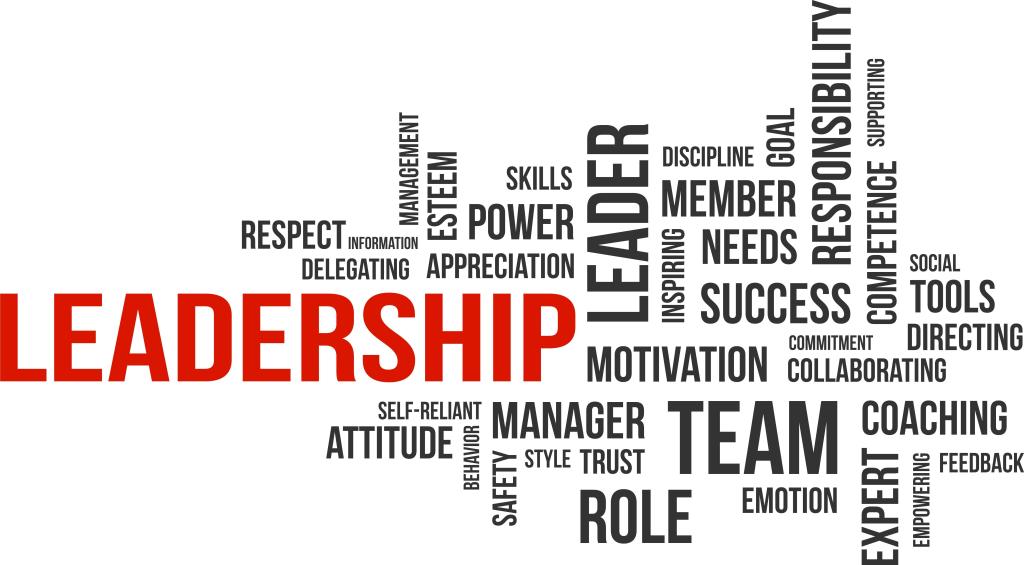
  • What is Leadership? Who is a Leader? What is Leading?

    Some widely used terms are difficult to define and are understood nebulously. ‘Leading’ is one of them. ‘Leading’ is used as a term for any set of activities that involves going ahead either individually or in a group.

     ‘Leadership’ is generally used both as a term for a process and also for a demonstrated skill-set. A leader is loosely used to describe someone who occupies a position of authority or power.

    Lead, Leader and Leadership – Origins of the Concepts

       Lead

    The origin of the word is from the old Norse word ‘lioa’ which meant ‘to go’. The equivalent old English word for ‘lead’ was ‘laedan’ which meant ‘to guide’ or ‘to go with one’. In middle English the word became ‘leden’.

    In the late fourteenth century it also acquired the meaning of ‘being in the first place’. It was also used as a noun which meant the ‘action of leading’ in the 13th century and ‘the front or the leading place’ from the 1560s.  There is no use of the word in ancient Greek or Latin literature.

    In medieval English, ‘lead’ was also a path or way or road. It meant showing the way. Earlier a shepherd used to ‘lead’ the flock. The shepherd had to see the direction and guide the group.

    It also meant that others followed of their own choice. Once the people do it out of deference to power, then it is no more leading. If the followers are not following of their own accord, then they are not being led.

    That is why leadership in formal structured hierarchies (where accepting authority is mandatory) is seen as truly effective only when followers have not merely completed the tasks as per stipulations but achieved something extraordinary beyond the routine job goals.

       Leader

    Someone or something that leads or is able to lead is a leader. The first known use of the word was in the fourteenth century.

    The one who leads is a ‘leader’. The word has different connotations in different languages. In German , it is ‘Fuhrer’, sadly misused by Hitler. In Indian languages it has no direct translation except ‘Neta’, typically now seen as a political leader. This political association tends to give it a negative perception and is pejorative in many ways.

    But merely holding a position is also not being a leader. It is much more than that.

       Leadership

    The capacity to ‘lead’ or the ‘act of leading’ is leadership. It was first used in 1821 for the’ position of a leader” from leader+ ship. Over a period of time it came to be understood as ‘characteristics necessary to be a leader’. 

    Leadership is about possessing the virtue of skills for leading. A person possessing these skills is a good leader.

    (Taken from ‘We the Leaders’)

    .

  • Let’s try to unravel leadership

    Throughout history, certain individuals have risen above the challenges of their time to create new realities. They’ve done so through visionary ideas, decisive actions, an unyielding inner drive, and a remarkable set of capabilities.

    Volumes have been written to unravel the mystery behind this movement for change and growth. Is it shaped by context? What drives certain men and women to confront the present and envision a better tomorrow? How do they inspire others to follow? What influences their decisions? And, most importantly, how can one cultivate these attributes and learn the skills that truly matter?

    This is an ongoing story. Contexts evolve. Societies transform. Leaders emerge, offering fresh templates for navigating the complexities of their era.

    This is the saga of leadership.

    Over time, countless theories and frameworks have sought to explain leadership. Each has provided valuable insights, but none has fully captured the vastness, nuances, and ambiguities inherent in the concept. Leadership remains a field too expansive to be confined by any single definition.

    And so, hundreds of books continue to be written, each attempting to shed light on this fascinating phenomenon.

    I’m here to dive into this journey of exploring leadership through both theories and the lessons embedded in the lives and actions of leaders. It’s a daunting quest, no doubt, but one that is exciting!