
Tag: india

  • How Achievements Propel Individuals into Leadership

    How does one transition from an ordinary individual to a leader? There are many paths. Some rise through excellence in their field, demonstrating exceptional qualities and earning the respect of those around them—like military heroes or politicians who gradually assume leadership through their work.

    However, another path to leadership exists. Some individuals achieve prominence in a different domain, and their success embodies the unfulfilled dreams of a community. Their achievements catapult them into the limelight, giving them a platform for leadership. If they are capable and willing, they evolve into genuine leaders.

    This phenomenon is evident in politics. Two striking examples come to mind.

    Dr. B.R. Ambedkar is a towering figure, particularly for millions of historically marginalized Indians, such as the Dalits. He played a pivotal role in mobilizing the masses and bringing national attention to the injustice of caste discrimination. Yet, before becoming a leader, he first distinguished himself as an extraordinary scholar. Earning two Ph.D.s—from Columbia University and the London School of Economics—he achieved what was almost unthinkable for someone from his background. His academic brilliance made him an aspirational figure, paving his way to leadership.

    Similarly, Biju Patnaik, who later became the Chief Minister of Odisha (my home state), first gained fame as a fearless pilot. He was among the first to fly into Srinagar when war erupted between Pakistani raiders and India post-partition. He also daringly rescued Indonesian resistance leader Sukarno when the country was under Dutch occupation, landing on an abandoned airstrip to fly him out of the country. His audacity resonated deeply with the people of Odisha, known for their gentle and reserved nature. Patnaik’s exploits embodied their unspoken aspirations, proving that someone from their midst could achieve the extraordinary. This deep connection cemented his path to leadership, a status he retains even long after his time.

    Leadership is not always a deliberate pursuit. Sometimes, it is thrust upon those whose achievements awaken a sense of possibility in others. Whether through intellectual brilliance or daring heroism, those who inspire and represent the collective dreams of their people often find themselves propelled into leadership.
  • Breaking Barriers: Women in India’s constituent assembly

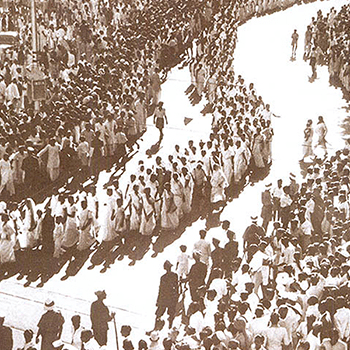
    The Indian Constituent Assembly crafted a remarkably progressive constitution—an achievement made more extraordinary by the religious, caste, and class divisions that permeated Indian society at the time.

    Among the 299 members were fifteen women, each with an extraordinary life story. These remarkable leaders established new benchmarks for breaking limits, yet their contributions remain relatively unknown to many today.

    What unites these women is their revolutionary perspective on social barriers. They recognized these obstacles not as reflections of individual capability but as manifestations of social conditioning—an invisible framework constraining thought and action. While most accepted these artificial limitations, these fifteen women demonstrated the power of breaking free.

    Consider Ammu Swaminathan. Born the thirteenth child of a government employee struggling to support his family, she grew up without formal education. Her Keralite Menon family knew a Tamil Brahmin family whose son, Subbaramu, had earned degrees in law and physics from Edinburgh and a Ph.D. from Harvard.  

    When Subbaramu proposed despite their 23-year age difference, Ammu accepted with clear conditions. She would move to Madras, learn English, and maintain her independence. In Madras, Ammu mastered English, joined theater groups, played tennis, and drove automobiles—all unprecedented for women in that conservative society. When her daughter Lakshmi (later Lakshmi Sehgal, Subhas Bose’s lieutenant) sought divorce, Ammu supported her decision without hesitation, again unheard of in early 20th century India.

    Ammu became a vital member of the Women’s India Association, the premier body for women’s rights. She advocated vigorously for child marriage abolition, widow remarriage, inheritance reform, and divorce legislation. Later her leadership elevated her to both Vice President and President of the organization.

    She embraced the freedom movement with complete dedication. Following Gandhi’s call to boycott foreign goods, she burned her imported clothing. She participated in the Quit India movement, won elections, and later served in Parliament. Both in the Constituent Assembly and afterward, she fought for women’s rights against deeply entrenched patriarchy.

    Ammu’s life exemplifies triumph over adversity and defiance of orthodoxy. The stories of the other fourteen women in the Constituent Assembly reflect similar courage. All of them refused to let prevailing mindsets define them or limit what they could do.

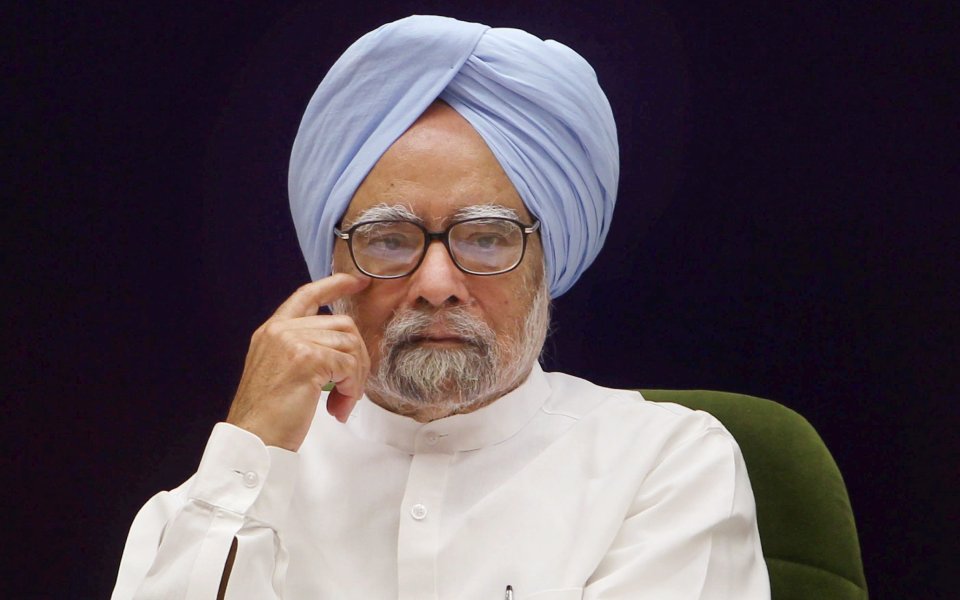
  • The quiet leadership of Manmohan Singh

    Yesterday, Dr. Manmohan Singh, India’s Prime Minister from 2004 to 2014 and Finance Minister from 1991 to 1996, passed away at the age of 92. As Finance Minister, he spearheaded the economic reforms of 1991 that set India on a path of sustained growth, averaging over 6% for three decades and lifting millions out of poverty.

    Dr. Singh was a humble and unassuming leader. With degrees from Cambridge and Oxford, and a career that included pivotal roles in India’s economic policymaking, few could rival his credentials. Known for his wisdom, intellect, and brilliance, he was also admired for his integrity and pragmatism.

    Despite his virtues and extraordinary contributions, Dr. Singh often faced undue criticism and received less recognition than he deserved. This was partly due to his self-effacing nature. He rarely spoke about his achievements or defended himself against baseless attacks. In the combative realm of politics, where criticism from adversaries often amplifies perceived shortcomings, his silence limited his influence in the eyes of many.

    While he remains revered as an exceptional leader and visionary by those familiar with his work, a significant section of the populace has been less appreciative. As a leader, navigating the political and social landscape requires not only competence but also the ability to counter negativity and project strength when needed.

    Dr. Singh’s career underscores an important lesson: even in the pursuit of noble goals, leaders in the public arena must address the realities of perception and public discourse. While humility is a virtue, finding ways to neutralize unwarranted criticism is also very crucial. 

  • Understanding integrity

    Integrity is a cornerstone of leadership and influence. It has many aspects to it but the core meaning is about being whole, staying aligned between your actions and words. This comes easy when there is no challenge, and no chance of failure. This is truly tested when the odds are stacked against you, with followers questioning your moves and ready to abandon you. Your moral fibre is under strain and you have to ask those questions to yourself and get the answers. Any step back may be pragmatic but can make your integrity ambiguous.

    This happened with Gandhi in Feb 1922. He had given the call for the non cooperation movement and it had spread to the entire country and fired up the enthusiasm of people.

    On 2 Feb 1922 a group of protesters in Chauri Chaura were agitating against high meat prices. The police broke the protest and arrested a few leaders. On 5 Feb a group of 2000 odd protesters returned to the market and picketed a liquor shop. The police arrested one of their leaders and this enraged the protesters to march to the police station. There was a melee and the police fired and killed three of them. This was the last straw for the group and they torched the police station. In the ensuing chaos 22 policemen died.

    Gandhi was stunned by this incident. He thought of this as a betrayal of the principle of non violence and he decided to call off  the non cooperation movement.

    This was met with serious questions from some of the tallest leaders and the party. C Rajagopalchari, Motilal Nehru and many others went public with their disagreement. This also halted the momentum of the movement. Gandhi himself was put in prison by the British.

    But Gandhi was unmoved and refused to budge from his stand.

    The consequences of the move are debatable in some circles but this ensured Gandhi would be seen as a man of principle and so integrity. His leadership acquired a different kind of halo.