Tag: history

  • What you should not miss in managing change

    Managing change in an organization is one of the hardest things to do. While we often get the basics right—like communicating a vision, setting milestones, and tracking progress—we also tend to miss a few crucial elements.

    First, even scientific revolutions only happen when paradigms shift. Culture—or prevailing paradigms—ultimately determine what can change and what won’t. Period. The values and beliefs held by the majority dictate what gets priority and what gets challenged. The case of Dr Ignaz Semmelweis is a classic example: when he proposed that disinfecting hands after surgery reduces mortality, no one believed him. It took decades for that idea to be accepted across the medical community. Work on the dominant values and beliefs first.

    Second, when articulating a vision, imagery and metaphors play a vital role. Martin Luther King Jr.’s speech invoking “sunlit paths of justice” and the metaphor of “promissory checks”—illustrated this brilliantly.

    Third, understand the territory—the minutiae of the landscape—thoroughly. Make sure every dynamic of the change is grasped as fully as possible. Plan in detail and go for incremental shifts, because revolutionary change often meets strong resistance and can lead to efforts being dissipated in managing conflict. Identify the key people who will drive the change at each stage. Every aspect of the process must be mapped as clearly as possible.

  • Lessons from ‘Why Nations Fail’: Building Strong Organizations

    Geopolitics is endlessly fascinating. Some countries have flourished for a long time, while others have faltered. Some have enjoyed periods of growth only to  later decline. Many have tried to explain these patterns through geography, history, culture, education, or access to resources.

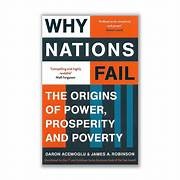
    Economists Daron Acemoglu of MIT and James Robinson of Harvard explored these questions in depth in their landmark study Why Nations Fail, which earned them the Nobel Prize in Economics in 2024. Their findings challenge conventional wisdom: the prosperity of nations does not stem from geography, history, culture, or natural wealth. Instead, it is the quality of a country’s institutions that determines its long-term success.

    Prosperous nations are built on inclusive institutions—those that encourage broad participation, uphold the rule of law, distribute power fairly among political bodies, and enable economic freedom. These institutions create a foundation for innovation, accountability, and growth. Over time, they generate a virtuous cycle of progress.

    By contrast, nations with extractive institutions—which concentrate power, limit participation, and suppress individual potential—tend to stagnate or decline. Poor institutional design leads to poor decisions, and over time, this erodes progress.

    There is a powerful lesson here for leaders in any field. Just as nations rise or fall based on institutional strength, so too do organizations. A sound internal framework—values, policies, and processes (its “constitution”)—is essential. Each function must operate effectively within its defined charter. Healthy tensions, such as those between audit and HR, or between design and operations, are not only natural but necessary for achieving optimal outcomes.

    A strong leader must take a macro view—crafting the right institutional architecture, setting the tone, and then empowering each part of the organization to function at its best. Inclusive leadership, clear incentives, and distributed responsibility are at  the heart of sustained success.

  • How Achievements Propel Individuals into Leadership

    How does one transition from an ordinary individual to a leader? There are many paths. Some rise through excellence in their field, demonstrating exceptional qualities and earning the respect of those around them—like military heroes or politicians who gradually assume leadership through their work.

    However, another path to leadership exists. Some individuals achieve prominence in a different domain, and their success embodies the unfulfilled dreams of a community. Their achievements catapult them into the limelight, giving them a platform for leadership. If they are capable and willing, they evolve into genuine leaders.

    This phenomenon is evident in politics. Two striking examples come to mind.

    Dr. B.R. Ambedkar is a towering figure, particularly for millions of historically marginalized Indians, such as the Dalits. He played a pivotal role in mobilizing the masses and bringing national attention to the injustice of caste discrimination. Yet, before becoming a leader, he first distinguished himself as an extraordinary scholar. Earning two Ph.D.s—from Columbia University and the London School of Economics—he achieved what was almost unthinkable for someone from his background. His academic brilliance made him an aspirational figure, paving his way to leadership.

    Similarly, Biju Patnaik, who later became the Chief Minister of Odisha (my home state), first gained fame as a fearless pilot. He was among the first to fly into Srinagar when war erupted between Pakistani raiders and India post-partition. He also daringly rescued Indonesian resistance leader Sukarno when the country was under Dutch occupation, landing on an abandoned airstrip to fly him out of the country. His audacity resonated deeply with the people of Odisha, known for their gentle and reserved nature. Patnaik’s exploits embodied their unspoken aspirations, proving that someone from their midst could achieve the extraordinary. This deep connection cemented his path to leadership, a status he retains even long after his time.

    Leadership is not always a deliberate pursuit. Sometimes, it is thrust upon those whose achievements awaken a sense of possibility in others. Whether through intellectual brilliance or daring heroism, those who inspire and represent the collective dreams of their people often find themselves propelled into leadership.

  • Employing the Socratic method in leading

    If leadership is about showing the way, then Socrates was the ultimate master of the art. In his time, the world was only vaguely understood, and his primary guides were perhaps the great Greek works, such as The Odyssey and the tragedies of Euripides. There was no media to amplify his message, yet he managed to inspire an entire state with his ideas.

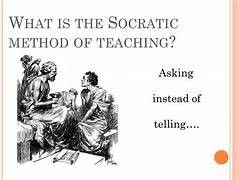
    Socrates recognized that merely pointing to the path was not enough; true leadership required helping people understand the path for themselves. He did this by gently yet persistently challenging their deepest assumptions and beliefs. Like a sculptor chiseling away at stone to reveal a masterpiece, he chipped away at unquestioned certainties, compelling individuals to look inward and discover deeper truths.

    To achieve this, he employed what is now known as the Socratic Method—a process of disciplined questioning designed to stimulate critical thinking and illuminate underlying assumptions. Rather than providing direct answers, Socrates asked a series of probing questions, encouraging individuals to examine their own reasoning and confront inconsistencies in their beliefs. This method was not about proving someone wrong but about guiding them toward greater clarity and self-awareness. The dialogue unfolded as a mutual exploration of truth, where Socrates acted as a facilitator rather than an authority. Through this process, his students often arrived at conclusions they had not previously considered, leading to a deeper and more lasting understanding.

    A key responsibility of a leader is to help people question their perspectives and see reality more clearly. In a corporate setting, this means fostering a deeper understanding of market dynamics; in a social or organizational context, it could mean guiding individuals toward balance and wisdom. By adopting the Socratic method, a leader can help others uncover the truth for themselves, leading to a stronger sense of ownership and commitment.

    Moreover, the act of questioning signals that the leader genuinely listens and seeks to understand where individuals are coming from, shaping a path forward through incremental progress.

    This form of leadership is gentle yet powerful, relying on essential soft skills such as listening, coaching, and fostering independent thought. By encouraging reflection and critical thinking, leaders can cultivate a culture of learning, adaptability, and wisdom—qualities that are invaluable in today’s complex world.

  • Breaking Barriers: Women in India’s constituent assembly

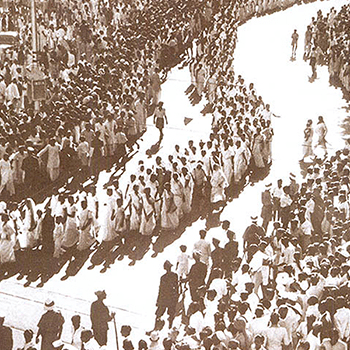
    The Indian Constituent Assembly crafted a remarkably progressive constitution—an achievement made more extraordinary by the religious, caste, and class divisions that permeated Indian society at the time.

    Among the 299 members were fifteen women, each with an extraordinary life story. These remarkable leaders established new benchmarks for breaking limits, yet their contributions remain relatively unknown to many today.

    What unites these women is their revolutionary perspective on social barriers. They recognized these obstacles not as reflections of individual capability but as manifestations of social conditioning—an invisible framework constraining thought and action. While most accepted these artificial limitations, these fifteen women demonstrated the power of breaking free.

    Consider Ammu Swaminathan. Born the thirteenth child of a government employee struggling to support his family, she grew up without formal education. Her Keralite Menon family knew a Tamil Brahmin family whose son, Subbaramu, had earned degrees in law and physics from Edinburgh and a Ph.D. from Harvard.  

    When Subbaramu proposed despite their 23-year age difference, Ammu accepted with clear conditions. She would move to Madras, learn English, and maintain her independence. In Madras, Ammu mastered English, joined theater groups, played tennis, and drove automobiles—all unprecedented for women in that conservative society. When her daughter Lakshmi (later Lakshmi Sehgal, Subhas Bose’s lieutenant) sought divorce, Ammu supported her decision without hesitation, again unheard of in early 20th century India.

    Ammu became a vital member of the Women’s India Association, the premier body for women’s rights. She advocated vigorously for child marriage abolition, widow remarriage, inheritance reform, and divorce legislation. Later her leadership elevated her to both Vice President and President of the organization.

    She embraced the freedom movement with complete dedication. Following Gandhi’s call to boycott foreign goods, she burned her imported clothing. She participated in the Quit India movement, won elections, and later served in Parliament. Both in the Constituent Assembly and afterward, she fought for women’s rights against deeply entrenched patriarchy.

    Ammu’s life exemplifies triumph over adversity and defiance of orthodoxy. The stories of the other fourteen women in the Constituent Assembly reflect similar courage. All of them refused to let prevailing mindsets define them or limit what they could do.

  • Two lessons on handling failure

    How do leaders handle failure? Leadership often involves venturing into the unknown and taking significant risks. Failures and setbacks are inevitable and can be devastating, yet how leaders respond to these challenges defines their journey.

    Here are two inspiring examples of leaders who managed failure in extraordinary ways:

    Steve Jobs

    By the age of 30, Steve Jobs was a superstar. He had taken Apple public, was worth hundreds of millions, and had revolutionized personal computing. However, trouble arose when Macintosh sales faltered, leading to conflicts with John Sculley, the CEO he had brought to Apple. In 1985, Jobs was ousted from the company he co-founded, an event he later described as feeling like a punch that knocked the wind out of him.

    The setback was profound. Jobs even sold all his Apple shares, signaling a complete break. Despite the emotional toll, his resilience and unwavering belief in his vision for computing innovation shone through. By August 1985, Jobs had started his next venture, NeXT, laying the groundwork for his eventual return to Apple and further transformative work. Jobs’ ability to rise from his lowest point demonstrated the power of resilience and the importance of moving forward even amid failure.

    Nelson Mandela: Persistence in the Face of Adversity

    Nelson Mandela’s fight against apartheid in South Africa stands as one of the most remarkable stories of persistence in the face of failure. Once a respected leader and activist, Mandela was imprisoned for 27 years, spending much of this time in solitary confinement. For many, such an ordeal would signify a crushing defeat.

    Mandela, however, refused to see it that way. He held steadfast to his vision of a free and equal South Africa. Even during his imprisonment, he continued to inspire others, keeping the dream alive. Upon his release, Mandela led South Africa out of apartheid, becoming its first democratically elected president and a global symbol of forgiveness and reconciliation.

    Failures are an inevitable part of leadership. However, the ability to handle failure with resilience, persistence, and faith in one’s vision is what separates great leaders from the rest. Whether it’s Steve Jobs rising from the ashes of his ouster or Nelson Mandela emerging from decades of imprisonment to change the course of history, their stories remind us that seemingly  unsurmountable setbacks are not the end.

  • Learning from Seneca

    Learning from Seneca

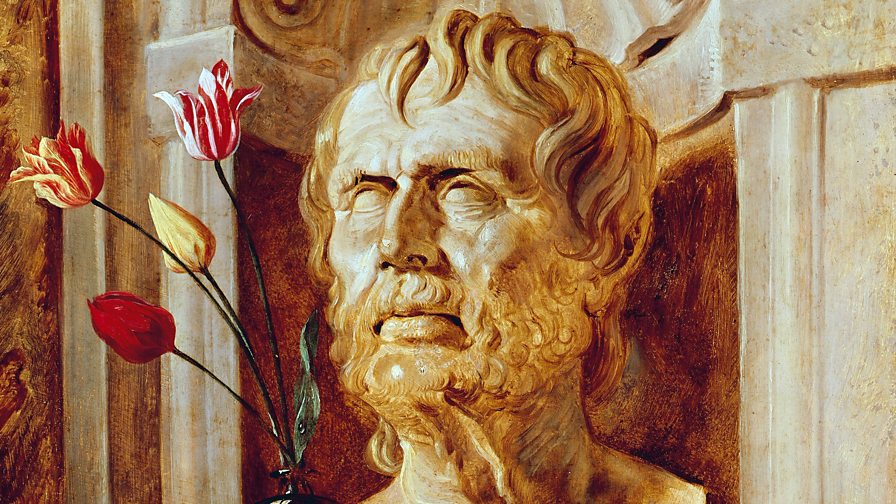
    Seneca’s influence on Western thought is monumental. Among those inspired by his ideas are intellectual giants like Descartes, Rousseau, Diderot, Dante, Chaucer, and Montaigne—a veritable roll call of Europe’s intellectual aristocracy.

    Born around the start of the Common Era, Seneca was a towering figure of his time. He served as the tutor to Rome’s infamous emperor Nero (until forced to leave to escape execution), a senator, and a prolific writer of essays, poems, and tragedies.

    Today, Seneca’s legacy is most closely associated with Stoicism, a philosophy of life founded around 336 BCE by Zeno, who taught in a stoa (or porch). Stoicism’s core principles remain deeply relevant for modern leaders:

    1. Universal equality and community: They viewed all human beings as equals and envisioned the world as a single community.
    2. Living in harmony with nature: This meant being content with life’s material essentials and using reason to understand and navigate existence.
    3. Perspective on good and bad: They believed that “there is nothing good or bad, but thinking makes it so.”

    In today’s world, leaders are bombarded by the relentless demands of consumerism, rapid shifts in circumstances, and overwhelming ambiguity, all of which can challenge their sense of reason and perspective.

    By embracing Seneca’s timeless wisdom, leaders can remain grounded and make more thoughtful, effective decisions.

    (To be expanded further with additional insights.)

  • Understanding integrity

    Integrity is a cornerstone of leadership and influence. It has many aspects to it but the core meaning is about being whole, staying aligned between your actions and words. This comes easy when there is no challenge, and no chance of failure. This is truly tested when the odds are stacked against you, with followers questioning your moves and ready to abandon you. Your moral fibre is under strain and you have to ask those questions to yourself and get the answers. Any step back may be pragmatic but can make your integrity ambiguous.

    This happened with Gandhi in Feb 1922. He had given the call for the non cooperation movement and it had spread to the entire country and fired up the enthusiasm of people.

    On 2 Feb 1922 a group of protesters in Chauri Chaura were agitating against high meat prices. The police broke the protest and arrested a few leaders. On 5 Feb a group of 2000 odd protesters returned to the market and picketed a liquor shop. The police arrested one of their leaders and this enraged the protesters to march to the police station. There was a melee and the police fired and killed three of them. This was the last straw for the group and they torched the police station. In the ensuing chaos 22 policemen died.

    Gandhi was stunned by this incident. He thought of this as a betrayal of the principle of non violence and he decided to call off  the non cooperation movement.

    This was met with serious questions from some of the tallest leaders and the party. C Rajagopalchari, Motilal Nehru and many others went public with their disagreement. This also halted the momentum of the movement. Gandhi himself was put in prison by the British.

    But Gandhi was unmoved and refused to budge from his stand.

    The consequences of the move are debatable in some circles but this ensured Gandhi would be seen as a man of principle and so integrity. His leadership acquired a different kind of halo.