Tag: business

  • What you should not miss in managing change

    Managing change in an organization is one of the hardest things to do. While we often get the basics right—like communicating a vision, setting milestones, and tracking progress—we also tend to miss a few crucial elements.

    First, even scientific revolutions only happen when paradigms shift. Culture—or prevailing paradigms—ultimately determine what can change and what won’t. Period. The values and beliefs held by the majority dictate what gets priority and what gets challenged. The case of Dr Ignaz Semmelweis is a classic example: when he proposed that disinfecting hands after surgery reduces mortality, no one believed him. It took decades for that idea to be accepted across the medical community. Work on the dominant values and beliefs first.

    Second, when articulating a vision, imagery and metaphors play a vital role. Martin Luther King Jr.’s speech invoking “sunlit paths of justice” and the metaphor of “promissory checks”—illustrated this brilliantly.

    Third, understand the territory—the minutiae of the landscape—thoroughly. Make sure every dynamic of the change is grasped as fully as possible. Plan in detail and go for incremental shifts, because revolutionary change often meets strong resistance and can lead to efforts being dissipated in managing conflict. Identify the key people who will drive the change at each stage. Every aspect of the process must be mapped as clearly as possible.


  • Evolution and Leadership Strategies

    Darwin’s theories reshaped our understanding of life, explaining how species evolve, inherit traits, and adapt to their environments. These principles of nature—adaptation, competition, and survival—are enduring principles for leadership too.

    Natural selection teaches that variation exists within any group, and those traits best suited to their environment are the ones that get passed on. In leadership, the behaviours that suit the constantly shifting markets, technologies, and challenges will succeed, while rigid approaches become obsolete.

    Survival of the fittest isn’t about being the strongest; it’s about being the most adaptable. The organisations which outcompete and  stay relevant are those who continuously learn, adjust their strategies, and evolve with the times.

    Common descent highlights the importance of inheritance—not just in biology, but in leadership. Strong leaders pass down knowledge, values, and culture, building future leaders and ensuring continuity.

    Gradualism reminds us that meaningful change takes time. Leadership is a journey of continuous learning, self-improvement, and small, consistent steps that lead to long-term impact.

    Variation is nature’s way of driving progress, and the same holds true for leadership. Different perspectives, leadership styles, and ways of thinking create stronger, more innovative organizations.

    At its core, Darwin’s work shows that success—whether in nature or leadership—belongs not to the strongest, but to those who evolve. Leaders who embrace change, nurture talent, and foster growth don’t just survive—they thrive.

  • More Scientific Decision Making

    Leading an organization is inherently complex, requiring a constant balancing act between legacy and future uncertainties while navigating the cultural and psychological rhythms of people within the system.

    Nature, too, is complex, yet humans have developed principles to understand it, codified in the scientific method. This approach, though powerful, differs from our instinctive decision-making, which tends to bypass structured analysis in favor of intuition. However, leaders can sharpen their decisions by integrating elements of scientific thinking.

    The process begins by identifying a specific issue and gathering preliminary data. 

    The next step is to form a hypothesis that is clear, measurable, and specific. 

    This hypothesis is then tested, keeping in mind the controllable and uncontrollable variables. Data from these tests is collected and analyzed.

     The findings are then openly discussed, allowing diverse perspectives to refine the conclusions.

    A few guiding principles strengthen this process: the simplest explanation is often the best, conclusions should be based on empirical evidence, and any hypothesis must be falsifiable—open to being disproven by a different set of data.

    While leadership decisions often operate under constraints, applying these principles where possible leads to sharper, rigorous, and more widely accepted outcomes.

  • How Achievements Propel Individuals into Leadership

    How does one transition from an ordinary individual to a leader? There are many paths. Some rise through excellence in their field, demonstrating exceptional qualities and earning the respect of those around them—like military heroes or politicians who gradually assume leadership through their work.

    However, another path to leadership exists. Some individuals achieve prominence in a different domain, and their success embodies the unfulfilled dreams of a community. Their achievements catapult them into the limelight, giving them a platform for leadership. If they are capable and willing, they evolve into genuine leaders.

    This phenomenon is evident in politics. Two striking examples come to mind.

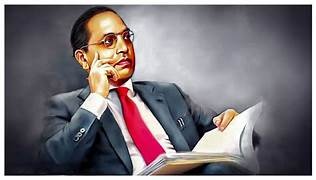
    Dr. B.R. Ambedkar is a towering figure, particularly for millions of historically marginalized Indians, such as the Dalits. He played a pivotal role in mobilizing the masses and bringing national attention to the injustice of caste discrimination. Yet, before becoming a leader, he first distinguished himself as an extraordinary scholar. Earning two Ph.D.s—from Columbia University and the London School of Economics—he achieved what was almost unthinkable for someone from his background. His academic brilliance made him an aspirational figure, paving his way to leadership.

    Similarly, Biju Patnaik, who later became the Chief Minister of Odisha (my home state), first gained fame as a fearless pilot. He was among the first to fly into Srinagar when war erupted between Pakistani raiders and India post-partition. He also daringly rescued Indonesian resistance leader Sukarno when the country was under Dutch occupation, landing on an abandoned airstrip to fly him out of the country. His audacity resonated deeply with the people of Odisha, known for their gentle and reserved nature. Patnaik’s exploits embodied their unspoken aspirations, proving that someone from their midst could achieve the extraordinary. This deep connection cemented his path to leadership, a status he retains even long after his time.

    Leadership is not always a deliberate pursuit. Sometimes, it is thrust upon those whose achievements awaken a sense of possibility in others. Whether through intellectual brilliance or daring heroism, those who inspire and represent the collective dreams of their people often find themselves propelled into leadership.

  • Employing the Socratic method in leading

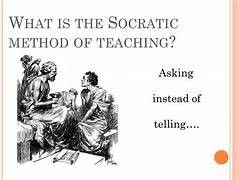
    If leadership is about showing the way, then Socrates was the ultimate master of the art. In his time, the world was only vaguely understood, and his primary guides were perhaps the great Greek works, such as The Odyssey and the tragedies of Euripides. There was no media to amplify his message, yet he managed to inspire an entire state with his ideas.

    Socrates recognized that merely pointing to the path was not enough; true leadership required helping people understand the path for themselves. He did this by gently yet persistently challenging their deepest assumptions and beliefs. Like a sculptor chiseling away at stone to reveal a masterpiece, he chipped away at unquestioned certainties, compelling individuals to look inward and discover deeper truths.

    To achieve this, he employed what is now known as the Socratic Method—a process of disciplined questioning designed to stimulate critical thinking and illuminate underlying assumptions. Rather than providing direct answers, Socrates asked a series of probing questions, encouraging individuals to examine their own reasoning and confront inconsistencies in their beliefs. This method was not about proving someone wrong but about guiding them toward greater clarity and self-awareness. The dialogue unfolded as a mutual exploration of truth, where Socrates acted as a facilitator rather than an authority. Through this process, his students often arrived at conclusions they had not previously considered, leading to a deeper and more lasting understanding.

    A key responsibility of a leader is to help people question their perspectives and see reality more clearly. In a corporate setting, this means fostering a deeper understanding of market dynamics; in a social or organizational context, it could mean guiding individuals toward balance and wisdom. By adopting the Socratic method, a leader can help others uncover the truth for themselves, leading to a stronger sense of ownership and commitment.

    Moreover, the act of questioning signals that the leader genuinely listens and seeks to understand where individuals are coming from, shaping a path forward through incremental progress.

    This form of leadership is gentle yet powerful, relying on essential soft skills such as listening, coaching, and fostering independent thought. By encouraging reflection and critical thinking, leaders can cultivate a culture of learning, adaptability, and wisdom—qualities that are invaluable in today’s complex world.

  • Mastering the Inner Game of Leadership

    Our minds are often consumed by incessant chatter. Past experiences, future anxieties, and ingrained biases constantly collide in this stream of self-talk. Unfortunately, much of this chatter tends to skew negative—a result of our biological programming. Early humans had to prioritize survival, evading danger at every turn. The principle of “better safe than sorry” is deeply embedded in our genetic makeup.

    For leaders, this internal noise can pose a significant challenge. They are required to make decisions constantly, and any negative self-talk or bias can lead to flawed judgments.

    In the 1960s and 1970s, tennis player and coach Timothy Gallwey introduced the concept of the “inner game.” According to Gallwey, every game operates on two levels: the outer game and the inner game. The outer game takes place on the court, competing against an opponent. The inner game, however, unfolds within the mind, wrestling with anxiety, self-doubt, and self-criticism. It is this inner game that can cloud judgment and hinder excellence.

    Humans navigate life with two minds: the conscious and the unconscious. Their interaction, mediated by intricate neural circuits, plays a critical role in determining success.

    By applying the principles of the inner game, leaders can elevate their performance. This involves cultivating a state of relaxed concentration—trusting the subconscious in moments of uncertainty, observing without judgment, being more aware and honing the ability to listen and learn. Abraham Maslow describes this state as “relatively egoless, fully functioning, and in the groove.”

    Operating from this mental space enables leaders to make sound decisions, even in the face of ambiguity, limited information, and rapid change.

  • Great Man Theory Revisited

    Leaders have always been fascinating to study, and throughout history, people have sought to understand what makes them stand out. In the 19th century, disciplines such as psychology and sociology were still in their infancy, and the scientific method was not widely applied to social phenomena.

    Thomas Carlyle, a prominent social philosopher of the 19th century, proposed the Great Man theory to explain leadership. According to this theory, some individuals are born with innate qualities that predestine them for exceptional achievements. These individuals, often men, were believed to be the driving force behind societal change. The theory suggests that leadership traits such as courage, wisdom, fairness, determination, and the ability to understand people and situations are biologically determined and inherent in certain men (excluding women).

    At the time, society primarily revered military heroes and monarchs, most of whom either inherited their positions or rose to power from a small aristocratic elite. In an era marked by upheaval and debates over the role of the church and monarchy, people sought explanations for the social and political turmoil. Carlyle’s theory suggested that great men, endowed by God with specific traits, were destined to lead and guide society forward.

    While influential in its time, the Great Man theory was later discredited for its overly simplistic and deterministic assumptions. Rightly so, as it overlooks the complex interplay of environment, circumstances, and personal development in shaping leaders.

    Nevertheless, this theory continues to resonate at an intuitive level. Even today, when we try to understand leaders, we often mythologize them, attributing extraordinary abilities to their success. In truth, many leaders are individuals who have cultivated specific skills and happened to be a hap[py confluence of  favorable circumstances that propels their rise to prominence.

  • Society & leadership

    Corporate leaders often find themselves consumed by the immediate demands of their business environment—market share, growth, and stock performance. While these metrics are important and shape specific behaviors, they are often guided by historical norms and typically have limited impact on the broader external environment.

    However, times change. Markets evolve, priorities shift, and competition transforms. What once seemed like a benign pursuit of market share and valuations can sometimes result in harmful effects on society or the environment. In other cases, even without external changes, leaders may make decisions that inadvertently harm the communities they serve.

    This is where true leadership becomes critical. A responsible leader prioritizes societal well-being above organizational gains and places personal interests last. Such a leader is deeply sensitive to the interplay between corporate goals and their societal impact.

    True leadership means ensuring that human values and societal principles take precedence when they conflict with organizational objectives. It is about acting as a steward of societal balance and long-term interests rather than focusing solely on short-term corporate gains.

    When we witness events like environmental disasters like oil spillages caused by negligence or financial scandals such as Wall Street’s excesses, it becomes evident how detrimental poor leadership can be. These are examples of leaders chasing misguided priorities, or “false gods,” at the expense of society.

    Good leadership is about accountability, foresight, and the courage to make decisions that preserve society’s finest values above everything else.

  • What is Leadership? Who is a Leader? What is Leading?

    Some widely used terms are difficult to define and are understood nebulously. ‘Leading’ is one of them. ‘Leading’ is used as a term for any set of activities that involves going ahead either individually or in a group.

     ‘Leadership’ is generally used both as a term for a process and also for a demonstrated skill-set. A leader is loosely used to describe someone who occupies a position of authority or power.

    Lead, Leader and Leadership – Origins of the Concepts

       Lead

    The origin of the word is from the old Norse word ‘lioa’ which meant ‘to go’. The equivalent old English word for ‘lead’ was ‘laedan’ which meant ‘to guide’ or ‘to go with one’. In middle English the word became ‘leden’.

    In the late fourteenth century it also acquired the meaning of ‘being in the first place’. It was also used as a noun which meant the ‘action of leading’ in the 13th century and ‘the front or the leading place’ from the 1560s.  There is no use of the word in ancient Greek or Latin literature.

    In medieval English, ‘lead’ was also a path or way or road. It meant showing the way. Earlier a shepherd used to ‘lead’ the flock. The shepherd had to see the direction and guide the group.

    It also meant that others followed of their own choice. Once the people do it out of deference to power, then it is no more leading. If the followers are not following of their own accord, then they are not being led.

    That is why leadership in formal structured hierarchies (where accepting authority is mandatory) is seen as truly effective only when followers have not merely completed the tasks as per stipulations but achieved something extraordinary beyond the routine job goals.

       Leader

    Someone or something that leads or is able to lead is a leader. The first known use of the word was in the fourteenth century.

    The one who leads is a ‘leader’. The word has different connotations in different languages. In German , it is ‘Fuhrer’, sadly misused by Hitler. In Indian languages it has no direct translation except ‘Neta’, typically now seen as a political leader. This political association tends to give it a negative perception and is pejorative in many ways.

    But merely holding a position is also not being a leader. It is much more than that.

       Leadership

    The capacity to ‘lead’ or the ‘act of leading’ is leadership. It was first used in 1821 for the’ position of a leader” from leader+ ship. Over a period of time it came to be understood as ‘characteristics necessary to be a leader’. 

    Leadership is about possessing the virtue of skills for leading. A person possessing these skills is a good leader.

    (Taken from ‘We the Leaders’)

    .