Category: Uncategorized

  • The quiet leadership of Manmohan Singh

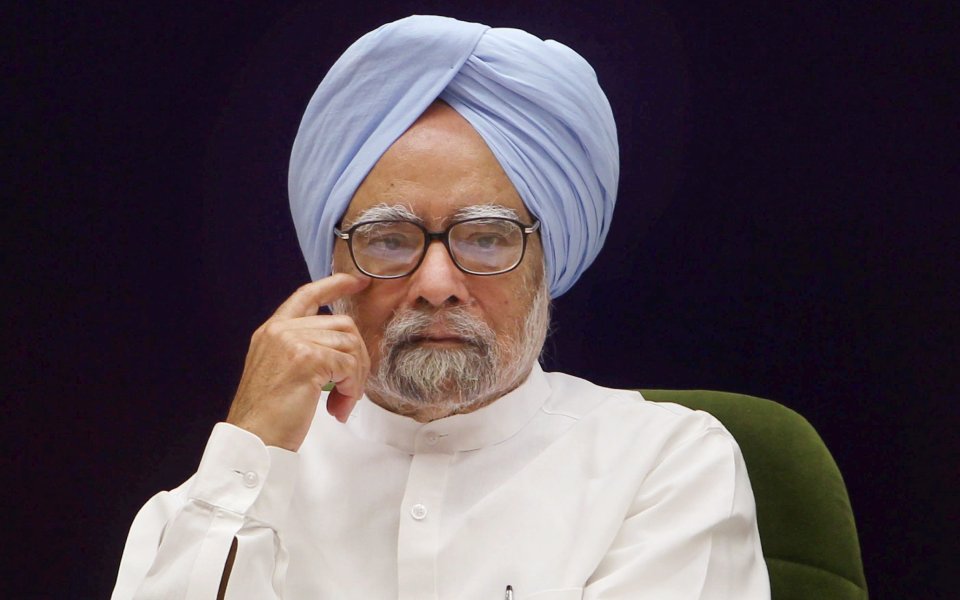
    Yesterday, Dr. Manmohan Singh, India’s Prime Minister from 2004 to 2014 and Finance Minister from 1991 to 1996, passed away at the age of 92. As Finance Minister, he spearheaded the economic reforms of 1991 that set India on a path of sustained growth, averaging over 6% for three decades and lifting millions out of poverty.

    Dr. Singh was a humble and unassuming leader. With degrees from Cambridge and Oxford, and a career that included pivotal roles in India’s economic policymaking, few could rival his credentials. Known for his wisdom, intellect, and brilliance, he was also admired for his integrity and pragmatism.

    Despite his virtues and extraordinary contributions, Dr. Singh often faced undue criticism and received less recognition than he deserved. This was partly due to his self-effacing nature. He rarely spoke about his achievements or defended himself against baseless attacks. In the combative realm of politics, where criticism from adversaries often amplifies perceived shortcomings, his silence limited his influence in the eyes of many.

    While he remains revered as an exceptional leader and visionary by those familiar with his work, a significant section of the populace has been less appreciative. As a leader, navigating the political and social landscape requires not only competence but also the ability to counter negativity and project strength when needed.

    Dr. Singh’s career underscores an important lesson: even in the pursuit of noble goals, leaders in the public arena must address the realities of perception and public discourse. While humility is a virtue, finding ways to neutralize unwarranted criticism is also very crucial. 

  • Two lessons on handling failure

    How do leaders handle failure? Leadership often involves venturing into the unknown and taking significant risks. Failures and setbacks are inevitable and can be devastating, yet how leaders respond to these challenges defines their journey.

    Here are two inspiring examples of leaders who managed failure in extraordinary ways:

    Steve Jobs

    By the age of 30, Steve Jobs was a superstar. He had taken Apple public, was worth hundreds of millions, and had revolutionized personal computing. However, trouble arose when Macintosh sales faltered, leading to conflicts with John Sculley, the CEO he had brought to Apple. In 1985, Jobs was ousted from the company he co-founded, an event he later described as feeling like a punch that knocked the wind out of him.

    The setback was profound. Jobs even sold all his Apple shares, signaling a complete break. Despite the emotional toll, his resilience and unwavering belief in his vision for computing innovation shone through. By August 1985, Jobs had started his next venture, NeXT, laying the groundwork for his eventual return to Apple and further transformative work. Jobs’ ability to rise from his lowest point demonstrated the power of resilience and the importance of moving forward even amid failure.

    Nelson Mandela: Persistence in the Face of Adversity

    Nelson Mandela’s fight against apartheid in South Africa stands as one of the most remarkable stories of persistence in the face of failure. Once a respected leader and activist, Mandela was imprisoned for 27 years, spending much of this time in solitary confinement. For many, such an ordeal would signify a crushing defeat.

    Mandela, however, refused to see it that way. He held steadfast to his vision of a free and equal South Africa. Even during his imprisonment, he continued to inspire others, keeping the dream alive. Upon his release, Mandela led South Africa out of apartheid, becoming its first democratically elected president and a global symbol of forgiveness and reconciliation.

    Failures are an inevitable part of leadership. However, the ability to handle failure with resilience, persistence, and faith in one’s vision is what separates great leaders from the rest. Whether it’s Steve Jobs rising from the ashes of his ouster or Nelson Mandela emerging from decades of imprisonment to change the course of history, their stories remind us that seemingly  unsurmountable setbacks are not the end.

  • The Power of Open-Minded Leadership: Projective Thinking Explained

    Projective thinking can be an effective tool for leaders. We tend to see our strongly held beliefs to be true and then see everything through this prism. Our thinking is mostly reactive. Projective thinking needs us to suspend belief; create context, concepts and speculate. It is about being open minded and imaginative.

    Human mind is intelligent enough to fit logic into anything. And so people can argue against anything new.

    Even scientists and science falls into this trap and many times is blind to whatever is in front of it and which is not part of existing frameworks. Ignaz Semmelweis first suggested the idea that doctors should throughly clean  their hands between handling pregnancies and corpses or they were killing too many women. This was seen as so disruptive that he was ostracised and eventually he died in an insane asylum as fallout of this.

    In the middle ages, in the era of extensive religious wars, Akbar, an Indian emepror came up with Din I Illahi, an eclectic religious thinking, that combined ideas from Islam, Hindusim, Christianity and other religions. While this did not become the state religion, it promoted the idea of tolerance and co-existence.

    In the Indian business context Tatas realised that benefiting the society can help the business itself. Unlike almost all the groups, they made social responsibility their central theme. They had one ad of a steel company that talked about their various social initiatives and then ended with ‘ We also make steel’.

    Projective thinking is about completely new paradigms and is the basis of innovation for leaders. 

  • The power of vision

    A clear vision is one of the most important tools of an effective leader. It is the ability to imagine possibilities—sometimes seemingly impossible—about the future, rooted in the hopes and dreams of the leader and their team.

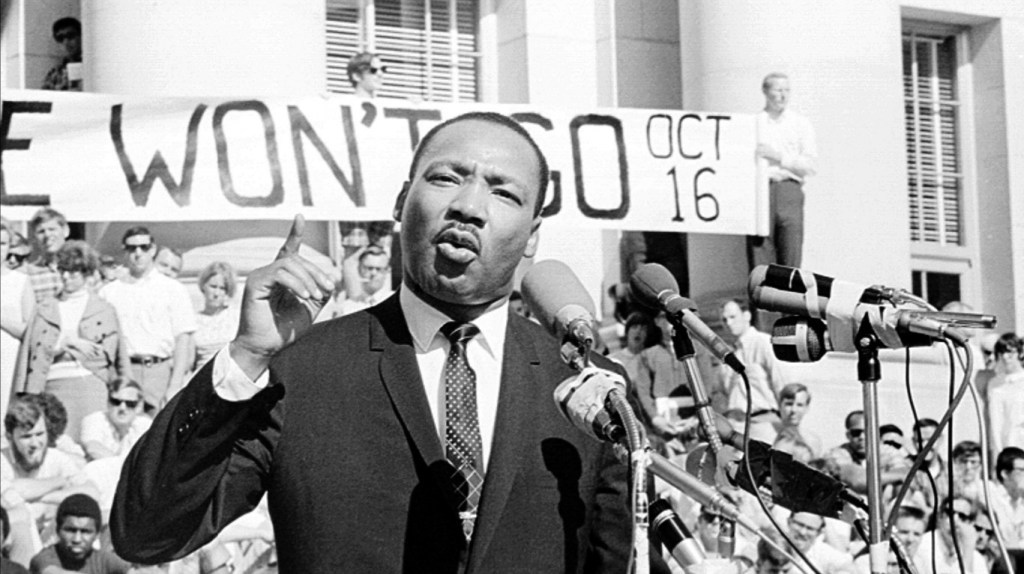
    An extraordinary vision can ignite people’s imagination and act as a powerful driver for achieving ambitious goals. History offers compelling examples of how visionaries have shaped the world. In 1947, India had just 12% literacy and a society entrenched in feudalism. Yet, its founding fathers envisioned a modern, secular, and progressive nation, a dream that continues to inspire. Martin Luther King Jr. spoke of “sunlit paths of justice” replacing “the dark and desolate valleys of segregation,” a vision that transformed the civil rights movement.

    Similarly, Steve Jobs imagined a world where every individual owned a personal computer at a time when massive machines dominated the industry. His vision not only revolutionized technology but also redefined accessibility. John F. Kennedy’s bold call to land a man on the moon by the end of the 1960s sparked the Apollo 11 mission, marking a defining moment in human history and a milestone for human aspiration.

    These leaders demonstrated how visionary thinking can transform nations, societies, and industries. Yet, despite the widespread prevalence of vision statements in organizations, many fail to inspire. Employees often feel disconnected because these visions are poorly conceived—neither grounded in reality nor inspiring future possibilities. As a result, they often become impractical, meaningless phrases.

    However, this does not have to be the case. A well-thought-out vision has the potential to resonate deeply, capture people’s aspirations, and ignite revolutions that achieve the seemingly impossible. When crafted with care and insight, a vision becomes more than a statement—it becomes a force for change.

  • Learning from Seneca

    Learning from Seneca

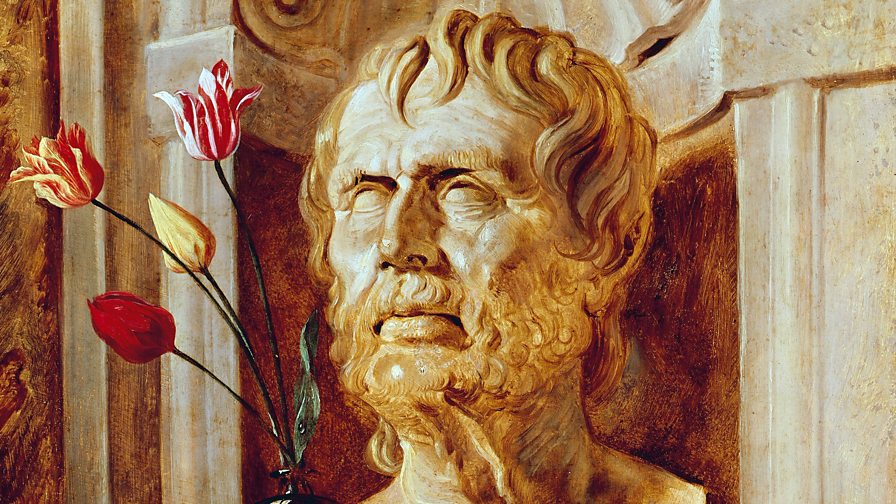
    Seneca’s influence on Western thought is monumental. Among those inspired by his ideas are intellectual giants like Descartes, Rousseau, Diderot, Dante, Chaucer, and Montaigne—a veritable roll call of Europe’s intellectual aristocracy.

    Born around the start of the Common Era, Seneca was a towering figure of his time. He served as the tutor to Rome’s infamous emperor Nero (until forced to leave to escape execution), a senator, and a prolific writer of essays, poems, and tragedies.

    Today, Seneca’s legacy is most closely associated with Stoicism, a philosophy of life founded around 336 BCE by Zeno, who taught in a stoa (or porch). Stoicism’s core principles remain deeply relevant for modern leaders:

    1. Universal equality and community: They viewed all human beings as equals and envisioned the world as a single community.
    2. Living in harmony with nature: This meant being content with life’s material essentials and using reason to understand and navigate existence.
    3. Perspective on good and bad: They believed that “there is nothing good or bad, but thinking makes it so.”

    In today’s world, leaders are bombarded by the relentless demands of consumerism, rapid shifts in circumstances, and overwhelming ambiguity, all of which can challenge their sense of reason and perspective.

    By embracing Seneca’s timeless wisdom, leaders can remain grounded and make more thoughtful, effective decisions.

    (To be expanded further with additional insights.)

  • Society & leadership

    Corporate leaders often find themselves consumed by the immediate demands of their business environment—market share, growth, and stock performance. While these metrics are important and shape specific behaviors, they are often guided by historical norms and typically have limited impact on the broader external environment.

    However, times change. Markets evolve, priorities shift, and competition transforms. What once seemed like a benign pursuit of market share and valuations can sometimes result in harmful effects on society or the environment. In other cases, even without external changes, leaders may make decisions that inadvertently harm the communities they serve.

    This is where true leadership becomes critical. A responsible leader prioritizes societal well-being above organizational gains and places personal interests last. Such a leader is deeply sensitive to the interplay between corporate goals and their societal impact.

    True leadership means ensuring that human values and societal principles take precedence when they conflict with organizational objectives. It is about acting as a steward of societal balance and long-term interests rather than focusing solely on short-term corporate gains.

    When we witness events like environmental disasters like oil spillages caused by negligence or financial scandals such as Wall Street’s excesses, it becomes evident how detrimental poor leadership can be. These are examples of leaders chasing misguided priorities, or “false gods,” at the expense of society.

    Good leadership is about accountability, foresight, and the courage to make decisions that preserve society’s finest values above everything else.

  • Transformative moments

    Within each of us lie qualities we often fail to recognize—hidden, untapped, and waiting to be discovered. The human persona is a deep well of mystery, with emotions and insights lurking beneath the surface. At times, events ignite these hidden depths, sparking a change that alters the trajectory of our lives.

    Consider Gandhi. Before becoming a global symbol of nonviolent resistance, he was a conscientious lawyer working in South Africa. On 7 June 1893, while traveling first class on a train from Durban to Pretoria, he was asked to move to a third-class compartment simply because he was not white and looked like a coolie. He refused. He was thrown out by the railway authorities at the Pietermaritzburg railway station. This incident  became a turning point in his life. This moment of humiliation and injustice awakened a deep resolve within him. Gandhi decided to channel his energy into fighting apartheid, setting him on a path that would ultimately shape history.

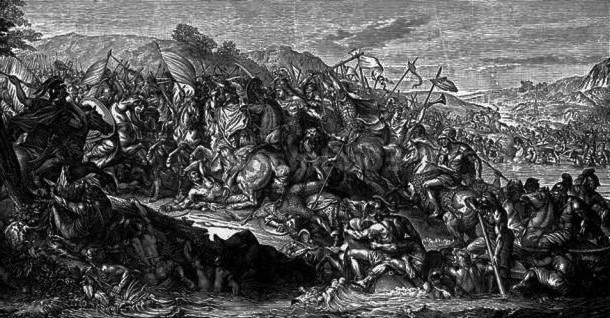
    Two millennia earlier in 262 BC, another transformative moment occurred—this time, on the banks of the Daya(kindness in English). Emperor Ashoka, like many rulers of his time, was ruthless in his pursuit of power. He had killed most of his brothers to claim the throne. He decided to wage a brutal war against the prosperous kingdom of Kalinga. The war was devastating: an estimated 150,000 soldiers perished, and the river ran red with blood. Witnessing the horrors of his own conquest, Ashoka experienced a profound moment of repentance. Overcome with grief and guilt, he turned away from violence and embraced Buddhism. From a ruthless warrior, he transformed into a proponent of peace and coexistence, ultimately earning the title “Ashoka the Great.” His deeds of mercy and compassion make him possibly the greatest king in Indian history.

    These stories remind us that within moments of crisis and reflection, our hidden potential can be revealed. They show how transformative experiences can awaken new perspectives, dramatically reshaping not just individuals but the world around them.

  • Self Mastery

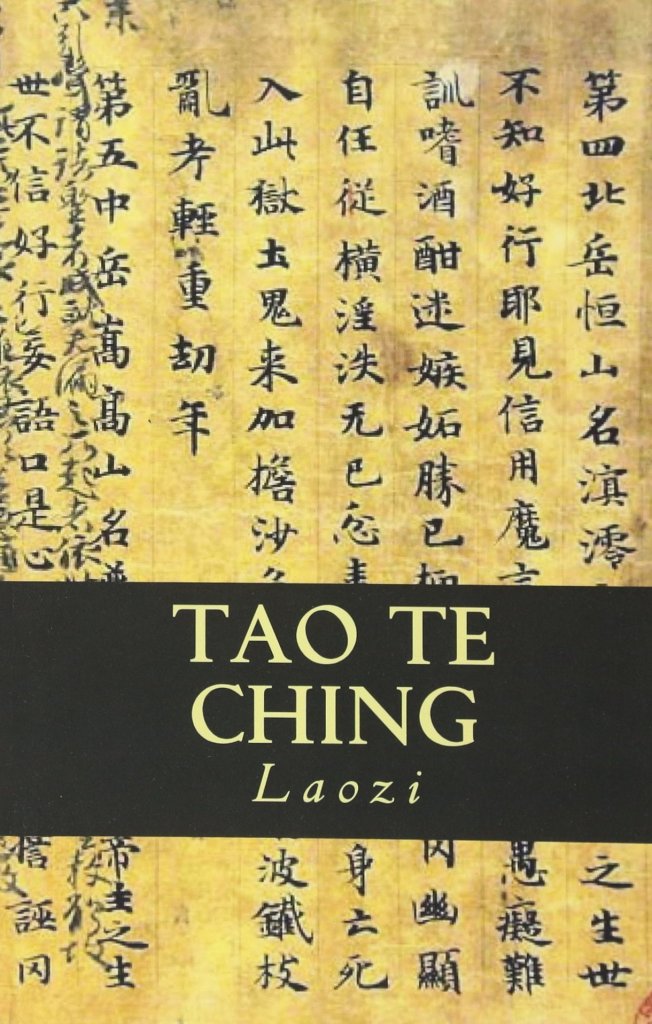
    The Sixth century BC saw an unusual flourishing of philosophical wisdom in Asia. There was Buddha in India and Lao Tzu in China.

    Lao Tzu wrote Tao Te Ching – Tao is translated as The Way, Te is power or potential and Ching means a book.

    The 81 verses are a powerful way to understand the nature of reality.

    Self knowledge and self-mastery are the primary goals of humans as per the author. They are achieved when humans connect their inner mind with the subtle changes in the outer world thus developing an ability to influence events more intelligently or to act more in harmony with the world.

    Mastering the self

    Those who know others are intelligent;

    Those who know themselves have insight.

    Those who master others have force;

    Those who master themselves have strength.

    Those who know what is enough are wealthy.

    Those who persevere have direction.

    Those who maintain their positions endure.

    And those who die and yet do not perish, live on.

    This passage highlights the deep wisdom of self-mastery. To know others is a sign of intelligence, but to truly know oneself reveals profound insight. Mastering others may require power or force, yet mastering oneself demands strength of character and inner discipline.

    True wealth comes from knowing what is enough. It is not measured by material possessions but by contentment and gratitude.

    Perseverance gives clarity and a sense of direction, helping us stay focused on our goals. Standing firm in one’s values ensures resilience and the ability to endure life’s challenges.

    A life lived with meaning and purpose leaves an impact that outlasts death. Self-mastery is not just about personal growth; it is about creating a lasting influence on the world and those we touch.

  • Understanding integrity

    Integrity is a cornerstone of leadership and influence. It has many aspects to it but the core meaning is about being whole, staying aligned between your actions and words. This comes easy when there is no challenge, and no chance of failure. This is truly tested when the odds are stacked against you, with followers questioning your moves and ready to abandon you. Your moral fibre is under strain and you have to ask those questions to yourself and get the answers. Any step back may be pragmatic but can make your integrity ambiguous.

    This happened with Gandhi in Feb 1922. He had given the call for the non cooperation movement and it had spread to the entire country and fired up the enthusiasm of people.

    On 2 Feb 1922 a group of protesters in Chauri Chaura were agitating against high meat prices. The police broke the protest and arrested a few leaders. On 5 Feb a group of 2000 odd protesters returned to the market and picketed a liquor shop. The police arrested one of their leaders and this enraged the protesters to march to the police station. There was a melee and the police fired and killed three of them. This was the last straw for the group and they torched the police station. In the ensuing chaos 22 policemen died.

    Gandhi was stunned by this incident. He thought of this as a betrayal of the principle of non violence and he decided to call off  the non cooperation movement.

    This was met with serious questions from some of the tallest leaders and the party. C Rajagopalchari, Motilal Nehru and many others went public with their disagreement. This also halted the momentum of the movement. Gandhi himself was put in prison by the British.

    But Gandhi was unmoved and refused to budge from his stand.

    The consequences of the move are debatable in some circles but this ensured Gandhi would be seen as a man of principle and so integrity. His leadership acquired a different kind of halo.

  • Being vulnerable to grow

    Brené Brown, a sociology professor in Houston, has profoundly influenced how we think about vulnerability and courage. Her book Daring Greatly became a runaway bestseller, and her TED Talk has been viewed over 5 million times. Brown’s research reveals a powerful truth: being vulnerable is an act of courage, and embracing vulnerability is the key to overcoming our deepest fears.

    Brown drew inspiration from Theodore Roosevelt’s famous quote:

    “The credit belongs to the man who is actually in the arena, whose face is marred by dust and sweat and blood; who strives valiantly; who errs, who comes short again and again, because there is no effort without error and shortcoming.”

    This perspective frames vulnerability not as a weakness, but as a willingness to step into uncertainty and risk.

    1. By showing vulnerability, we confront fears that often stem from a perceived risk—usually the fear of failure or loss of face. These fears are more about mindset and past experiences than reality. When we face them head-on, we often find that just being present is enough to dissolve them.
    2.  Discomfort is not a sign of weakness but a necessary step toward growth. True transformation comes when we lean into discomfort instead of avoiding it.
    3.  Leaders are human, too, with fears and anxieties. However, to guide others effectively, they must continuously grow, which means shedding insecurities and embracing their vulnerabilities. This openness makes them more credible, relatable, and prepared to navigate challenges.