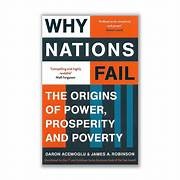
Geopolitics is endlessly fascinating. Some countries have flourished for a long time, while others have faltered. Some have enjoyed periods of growth only to later decline. Many have tried to explain these patterns through geography, history, culture, education, or access to resources.
Economists Daron Acemoglu of MIT and James Robinson of Harvard explored these questions in depth in their landmark study Why Nations Fail, which earned them the Nobel Prize in Economics in 2024. Their findings challenge conventional wisdom: the prosperity of nations does not stem from geography, history, culture, or natural wealth. Instead, it is the quality of a country’s institutions that determines its long-term success.
Prosperous nations are built on inclusive institutions—those that encourage broad participation, uphold the rule of law, distribute power fairly among political bodies, and enable economic freedom. These institutions create a foundation for innovation, accountability, and growth. Over time, they generate a virtuous cycle of progress.
By contrast, nations with extractive institutions—which concentrate power, limit participation, and suppress individual potential—tend to stagnate or decline. Poor institutional design leads to poor decisions, and over time, this erodes progress.
There is a powerful lesson here for leaders in any field. Just as nations rise or fall based on institutional strength, so too do organizations. A sound internal framework—values, policies, and processes (its “constitution”)—is essential. Each function must operate effectively within its defined charter. Healthy tensions, such as those between audit and HR, or between design and operations, are not only natural but necessary for achieving optimal outcomes.
A strong leader must take a macro view—crafting the right institutional architecture, setting the tone, and then empowering each part of the organization to function at its best. Inclusive leadership, clear incentives, and distributed responsibility are at the heart of sustained success.
 Lead Now
Leave a comment