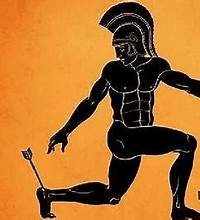
Achilles, the legendary warrior of the Greek epic Iliad, is known for his extraordinary strength and skill in battle. He joins the Trojan War with unmatched ferocity after the death of his companion, Patroclus. Born of the goddess Thetis, Achilles was made nearly invincible when his mother dipped him into the river Styx. However, the heel by which she held him remained vulnerable, ultimately becoming his undoing.
In modern terms, the “Achilles heel” symbolizes a flaw in our character or personality that has the potential to cause our downfall. Often, this weakness is a blind spot—a negative trait invisible to us but evident to others.
For many ambitious individuals, their Achilles heel is excessive ambition or greed. Elizabeth Holmes of Theranos serves as a stark example: her insatiable drive to achieve success led her to fabricate results, culminating in her downfall. Similarly, Jack Welch’s legacy was tarnished by his relentless pursuit of short-term gains through aggressive financialization, which ultimately destabilized General Electric.
Even idealistic traits can act as Achilles heels in certain contexts. Jawaharlal Nehru, India’s first Prime Minister, faced criticism for his handling of the 1962 Sino-Indian War and his deep belief in the state’s capacity to address complex societal issues—a perspective that, while noble, proved limiting in practical terms.
Self-awareness plays a crucial role in identifying and managing our own Achilles heels. By acknowledging and addressing these vulnerabilities, we can mitigate their impact and avoid the pitfalls that could otherwise derail our aspirations.
 Lead Now
Leave a comment