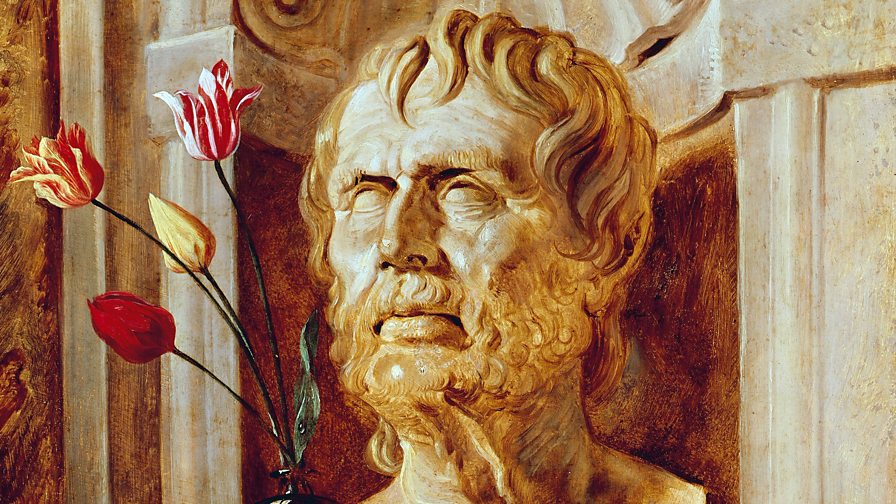
Learning from Seneca
Seneca’s influence on Western thought is monumental. Among those inspired by his ideas are intellectual giants like Descartes, Rousseau, Diderot, Dante, Chaucer, and Montaigne—a veritable roll call of Europe’s intellectual aristocracy.
Born around the start of the Common Era, Seneca was a towering figure of his time. He served as the tutor to Rome’s infamous emperor Nero (until forced to leave to escape execution), a senator, and a prolific writer of essays, poems, and tragedies.
Today, Seneca’s legacy is most closely associated with Stoicism, a philosophy of life founded around 336 BCE by Zeno, who taught in a stoa (or porch). Stoicism’s core principles remain deeply relevant for modern leaders:
- Universal equality and community: They viewed all human beings as equals and envisioned the world as a single community.
- Living in harmony with nature: This meant being content with life’s material essentials and using reason to understand and navigate existence.
- Perspective on good and bad: They believed that “there is nothing good or bad, but thinking makes it so.”
In today’s world, leaders are bombarded by the relentless demands of consumerism, rapid shifts in circumstances, and overwhelming ambiguity, all of which can challenge their sense of reason and perspective.
By embracing Seneca’s timeless wisdom, leaders can remain grounded and make more thoughtful, effective decisions.
(To be expanded further with additional insights.)
 Lead Now
Leave a comment