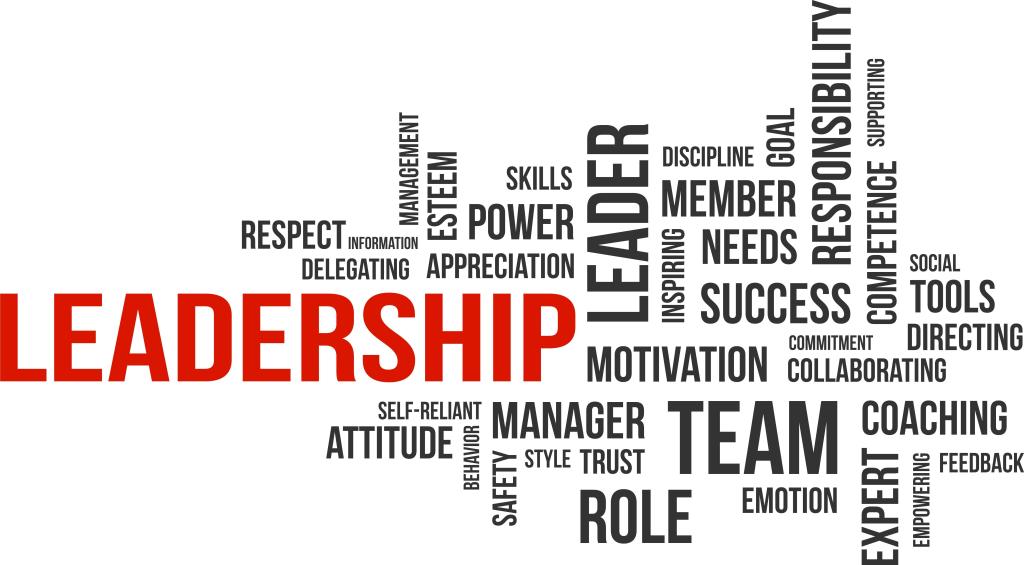
Some widely used terms are difficult to define and are understood nebulously. ‘Leading’ is one of them. ‘Leading’ is used as a term for any set of activities that involves going ahead either individually or in a group.
‘Leadership’ is generally used both as a term for a process and also for a demonstrated skill-set. A leader is loosely used to describe someone who occupies a position of authority or power.
Lead, Leader and Leadership – Origins of the Concepts
Lead
The origin of the word is from the old Norse word ‘lioa’ which meant ‘to go’. The equivalent old English word for ‘lead’ was ‘laedan’ which meant ‘to guide’ or ‘to go with one’. In middle English the word became ‘leden’.
In the late fourteenth century it also acquired the meaning of ‘being in the first place’. It was also used as a noun which meant the ‘action of leading’ in the 13th century and ‘the front or the leading place’ from the 1560s. There is no use of the word in ancient Greek or Latin literature.
In medieval English, ‘lead’ was also a path or way or road. It meant showing the way. Earlier a shepherd used to ‘lead’ the flock. The shepherd had to see the direction and guide the group.
It also meant that others followed of their own choice. Once the people do it out of deference to power, then it is no more leading. If the followers are not following of their own accord, then they are not being led.
That is why leadership in formal structured hierarchies (where accepting authority is mandatory) is seen as truly effective only when followers have not merely completed the tasks as per stipulations but achieved something extraordinary beyond the routine job goals.
Leader
Someone or something that leads or is able to lead is a leader. The first known use of the word was in the fourteenth century.
The one who leads is a ‘leader’. The word has different connotations in different languages. In German , it is ‘Fuhrer’, sadly misused by Hitler. In Indian languages it has no direct translation except ‘Neta’, typically now seen as a political leader. This political association tends to give it a negative perception and is pejorative in many ways.
But merely holding a position is also not being a leader. It is much more than that.
Leadership
The capacity to ‘lead’ or the ‘act of leading’ is leadership. It was first used in 1821 for the’ position of a leader” from leader+ ship. Over a period of time it came to be understood as ‘characteristics necessary to be a leader’.
Leadership is about possessing the virtue of skills for leading. A person possessing these skills is a good leader.
(Taken from ‘We the Leaders’)
.
 Lead Now
Leave a comment